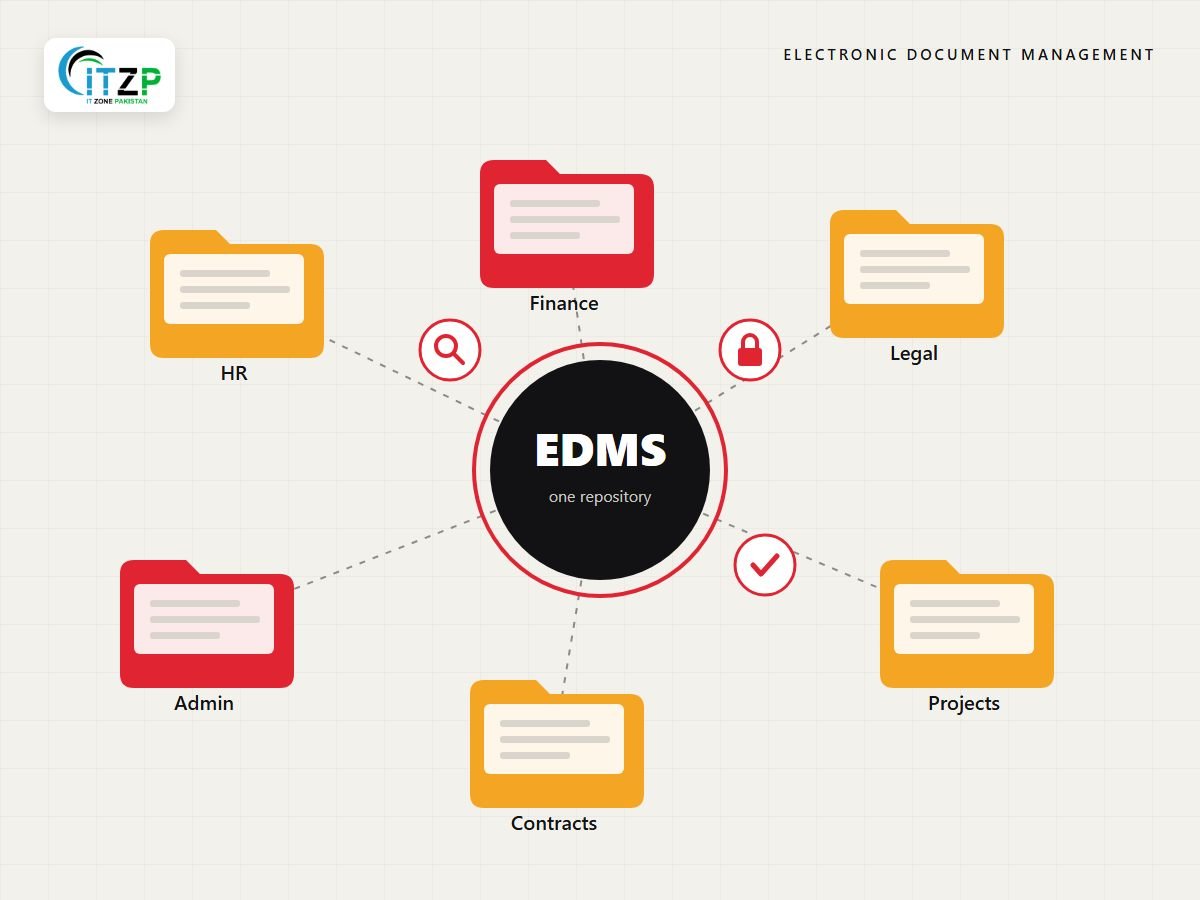
EDMS stands for electronic document management system. In practice it means the same as a DMS: software that gives every document one home, makes it searchable and controls who can see it. The word "electronic" simply stresses that paper has been replaced by digital files.
What an EDMS does
- Central repository: one library, organised by department and document type.
- Capture: upload single files or batches, including scanned paper.
- Search: full-text search with OCR finds words inside scanned pages.
- Access control: roles decide who can view, upload or approve each type.
- Workflows: documents routed for approval with a visible status.
- Retention: expired records listed for review and approved disposal.
EDMS vs shared folders
Shared folders store files but cannot search inside scans, control access by document type or route approvals. Read DMS vs shared drives.
EDMS, DMS, ECM and records management
- EDMS / DMS: manage documents day to day.
- ECM (enterprise content management): a broader term that includes other content types.
- Records management: the rules for keeping and disposing of records. See records management services.
How to choose an EDMS
- List your document types, departments and users.
- Check OCR search on your own scanned documents.
- Check roles, workflows and retention.
- Ask about hosting: cloud or your own servers.
- Ask who will scan and upload your existing paper.
Our Document Management & Retrieval System works as an EDMS and document archiving software in one, set up and supported by our team in Karachi.
Frequently asked questions
What does EDMS stand for?
Electronic document management system.
Is an EDMS the same as a DMS?
For most organisations, yes. Both store, search, secure and route documents.
Can an EDMS search scanned paper?
Yes, when the scans are made with OCR.
Book a free online demo over Zoom or Google Meet.