


What is a DBMS? Basic Concepts Explained – CIO Insight

Database management systems allow us to organize our data to easily find the information we need when we need it, even if the data doesn’t have any sort of order on its own. These systems are essential tools in today’s technological world, powering large and small businesses alike with their ability to store data and retrieve it when needed.
Table of Contents
A database management system (DBMS) is software that provides methods to create, manage, and access a large volume of data. These applications help automate processes such as adding new entries, modifying existing entries, and deleting entries when necessary.
Database management systems also serve to help users find information more quickly and efficiently. Users no longer need to spend time looking through hundreds of documents one at a time—they can now see what they’re looking for with just a few clicks.
Read more on Datamation: Current Database Trends & Applications
The primary function of a database management system is to provide users with access to stored data. Therefore, a DBMS must allow users to add new information, modify existing information, and delete old data.
In addition, a DBMS must ensure that only authorized users have access to any given piece of information. For a DBMS to perform these functions, it needs structure and organization that allows users to retrieve specific types of data based on certain criteria.
For example, if users wanted all accounts associated with customers who live in New York City, they could simply enter “New York” into a search field and return all matching records from the table. Once a database has been organized according to the organization’s specific needs, developers can begin creating applications around it.
The fundamental concepts and features of a DBMS include data models, query languages, file organization and indexing, normalization, candidate keys, and key fields.
A data model is an abstract representation of a database system. It is used to design and implement a database or define its schema—the structure and organization of how data is physically stored.
Data models are designed using a methodology called conceptual modeling. However, most data models are based on at least one formal model, such as entity-relationship modeling.
Just as programming languages are used to create software applications, DBMSs have their own specific languages which database administrators use to create databases. They’re generally called query languages, and they allow users to search and manipulate data stored in databases. The most commonly used query language is structured query language (SQL).
SQL is the standard language for database management and there are five widely used SQL sub-languages, they include:
Other query languages include NoSQL and XQuery. Each query language has its own syntax and capabilities, but they all follow similar principles. Each allows you to retrieve data from a database table or view, modify it if necessary, add new records to an existing table or view, and remove unwanted records.
Database file organization is required for better storage space utilization, reduction in access time, and faster retrieval.
The two levels of database files are index files and data files. Index files contain indexing structures that define data locations for faster retrieval when searching for specific records within a table structure. Indexing structures in DBMS include B-tree and other types of balanced trees, hash tables, bitmaps, etc. Data files store both fixed-length records and variable-length records.
Normalization is a process that eliminates redundant data and ensures that relationships between different records in a database make sense. Normalizing data in a database involves breaking down related tables into multiple tables based on business rules. Breaking up related tables into separate entities allows us to store data in more efficient ways while also helping to ensure consistency across multiple tables. This separation also makes updates easier and more reliable.
Normalization is an important part of designing database schemas because it helps to prevent data redundancy and avoidable issues like database corruption. Additionally, it helps make databases easier to update and improves query performance.
In a Relational database, the candidate key is a condition for defining a relationship between two or more tables. The candidate keys must be included in each table that refers to them. A candidate key is generally composed of unique attributes and contains values that never change during data storage. They help define groups.
A key field or primary key is a unique identifier for each row in a database table. A table can only have one, and a primary key must be unique across all tables and views. Primary keys are sometimes called natural keys or auto-incrementing fields. The value in a primary key is automatically incremented by 1 for every new record added to that table.
The most common types of database management systems include relational, distributed, hierarchical, client-server, and network models.
The relational database management system (RDBMS) is a database model that organizes data in tables. Each table consists of rows and columns with cells containing data items, also called fields.
An RDBMS provides facilities for defining, storing, retrieving, and modifying structured information. Structured data can be stored in multiple ways, such as lists, files, or documents; however, it is often stored within an RDBMS as a collection of interrelated tables.
A distributed database is a collection of logically linked databases that appear to users as a single, integrated database. The information within these individual databases may be physically stored in different locations across a network, but it seems part of one unified whole.
This allows for greater flexibility and scalability when dealing with large amounts of data. Distributed database management systems allow multiple computers or nodes to access shared data simultaneously, often over a common network. Each node can update its copy of data while other nodes have access to all copies at once.
A hierarchical database is a type of database in which each record has a set of fields and values organized into levels and sub-levels. Hierarchical databases store information by separating it into related groups called sets.
The highest level, also known as the root, contains all available information. As you move down to lower levels, more specific subsets appear. The number of records at each level reflects the amount of detail about each item.
A client-server database is a particular model wherein the database resides on a server, and users access it from their workstations. This configuration allows for multiple users to access data simultaneously and means that there are fewer servers for companies to maintain.
It’s important to note that a client-server database can be centralized or decentralized. Centralized systems have all information stored in one place, while decentralized systems allow different parts of an organization to keep their databases separate.
A network database model is based on a network data model that allows each record to have multiple parents and multiple child records. Network databases enable users to build a flexible model in which entities can be related in many different ways.
A DBMS can help organizations achieve greater efficiency in their operations by more effectively managing data across multiple applications, including different departments within an organization. Database management systems also help companies avoid information redundancy by consolidating various sources of data. The better a company can manage its data, the more easily it can adapt to changing market conditions and make well-informed business decisions.
Data storage and management are critical aspects of any business operation. Therefore, businesses need effective tools for storing and managing the data they can use across all facets of their organization. With a robust DBMS, companies have more control over how they store, access, share, and secure data; as a result, they benefit from increased organizational productivity while reducing costs related to IT infrastructure maintenance.
Also read: Best Data Modeling Tools
CIO Insight offers thought leadership and best practices in the IT security and management industry while providing expert recommendations on software solutions for IT leaders. It is the trusted resource for security professionals who need to maintain regulatory compliance for their teams and organizations. CIO Insight is an ideal website for IT decision makers, systems integrators and administrators, and IT managers to stay informed about emerging technologies, software developments and trends in the IT security and management industry.
Advertise with TechnologyAdvice on CIO Insight and our other IT-focused platforms.
Property of TechnologyAdvice.
© 2022 TechnologyAdvice. All Rights Reserved
Advertiser Disclosure: Some of the products that appear on this site are from companies from which TechnologyAdvice receives compensation. This compensation may impact how and where products appear on this site including, for example, the order in which they appear. TechnologyAdvice does not include all companies or all types of products available in the marketplace.
- Published in Uncategorized
Microsoft Word is finally adding this super-useful editing feature – TechRadar
- Published in Uncategorized
Digital records management: what does it mean for local government? – Open Access Government

Open Access Government interviews Steve Russell, Chief Technology Officer at GovOS to find out more about the digital transformation of local government.
Russell discusses the specific types of digital services available and the benefits and drawbacks of these digital solutions.
With the demand for digital government services rising sharply in recent years, many agencies are turning to software solutions to bring their community’s most essential services online. Lately, we’ve seen a growing interest in transitioning the marriage licensing process to a digital service that allows citizens to apply for and receive a marriage certificate online. In states that allow it, many counties also intend to transition away from requiring couples to appear in-person to complete the process.
Other examples include a range of licensing services such as business licensing, short-term rental licensing, liquor licensing, etc. as well as local and state tax remittance operations.
As the transition to digital services continues to gain traction, governments are gradually but determinedly moving from on-premise storage solutions to cloud-based solutions. This is due in large part to efforts to address growing concerns related to disaster preparedness, cyberattacks and a general need to do more with fewer resources.
The first and arguably most impactful benefit is cloud service providers’ security and encryption features. Moving records to servers hosted by AWS, for example, means they are now protected by the same level of security that is provided to the federal government. On top of the features provided, governments benefit from the continued investment and re-investment in the backup of those systems, and the staff that they employ to safeguard your data. Essentially local governments level up every aspect of their system without having to invest more time, money and resources.
The second benefit is making records management accessible. Considering just how many records governments are responsible for creating, managing, and distributing, and how quickly citizens may expect their requests for documents to be fulfilled, it’s not hard to imagine how much governments struggle with making records management accessible.
Digital records can be viewed on any device at any time and can be shared with multiple recipients at the same time (as opposed to a paper copy that must be passed back and forth). And, digital records allow governments to apply metadata that makes documents instantly searchable by their record type, cutting the time spent searching for a specific document down to seconds. Digital records can also be accessed faster by using saved searches to locate the most searched-for records.
The third benefit is audit preparedness. With digital records, governments can monitor system events such as when documents are created or disposed of when passwords change, and when users log in and out. They can use this information to generate audit reports that detail which users changed in a system and when.
The final benefit I’ll mention pertains to document retention. Governments constantly wrestle with how long specific records should be kept on file and what should be done with them once they reach that point. Do they need to be moved to a new folder, recategorised, disposed of, or something else? A wide range of record retention schedules exists for different types of records, making it hard to keep track of what needs to be done with which documents and when.
A digital document management system can enforce consistent policies throughout the entire records system and can auto-file newly created records, set schedules for retaining, transferring, archiving, or destroying records, and group records based on their retention schedule. This saves time and eliminates much of the human error that can result in inconsistent retention enforcement.
We’re continually blown away by the work that Bexar County Clerk Lucy Adame-Clark and her team is doing in Texas. Last year they were awarded the 2021 International Association of Government Officials (iGO) Innovator of the Year Award for their “Records on the Run” program, which combines GovOS software as well as Kofile preservation, imaging and indexing services. It’s a truly unique program that reduces foot traffic in government offices while making data more accessible using a mobile unit to bring these services directly to citizens. This is an initiative that both improves people’s lives and ensures their safety and well-being.
The mobile records unit, which was the first in the state of Texas, enables almost everything that can be done inside the county courthouse with the clerk’s office to be done from the truck. This means people can conduct business with the local government, even if government buildings must shut down, and it could be instrumental in helping the county get through the next major natural disaster or pandemic.
The mobile records unit offers its mobile services throughout the City of San Antonio, suburban cities and communities within Bexar County. The mobile unit services that will be offered include recording a military discharge record (DD-214), registering an assumed business name/DBA, and researching real property records, among many other services.
The first biggest challenge is making the information stored in records accessible to the public. It’s great to have all of your vital records and/or land records back to the 1700s scanned and indexed and available in the cloud. But that information is worthless if the people who need it can’t find what they’re looking for.
The second biggest challenge is agreeing on internal access to records being stored. Digital records can be easily overwritten or altered by employees if the government agency doesn’t identify the original person responsible for the record it produced. Governments need to define their hierarchy of access or cybersecurity procedure, and this requires significant legwork to account for all stakeholders in the organisation.
The third and perhaps biggest challenge is the lack of consistent guidance provided to agencies regarding procedures to guide digital records creation. Too often the documentation used to guide digitisation focuses more on how an application should be installed and less on how records are collected, stored and shared. Going digital is a chance to build good recordkeeping practices into new systems and set an agency up for long-term success with records management. Sadly, many systems are designed with no recordkeeping requirements, which leads to the loss of valuable records that protect the rights of citizens, provide evidence of government accountability and document specific and significant government historical events.
Solving for accessibility can be as simple as choosing a software provider with a powerful search engine, ideally one that can search text strings as well as scanned images.
Solving for records access again can come down to choosing a platform with an internal audit module, version control and user tracking.
For better recordkeeping procedures, local governments need to involve the records manager and other key stakeholders early in the process and give them a seat at the decision-makers table. This will help to ensure the creation of long-term systems and rules that will dictate how records are captured and maintained, and who will have access to them both internally and externally.
Interview with Steve Russell, Chief Technology Officer, GovOS
Steve brings more than 30 years of experience in software development and technology innovation to GovOS. Prior to joining the company in 2015, Steve led development and product teams for OpenText, Lucent Technologies, Global360, Mosaix, and IBM where he started his career. He is passionate about technology and how to use it to address the challenges and opportunities faced by local government. A native of Massachusetts, Steve, his wife and two boys currently reside on the west coast.
document.getElementById( “ak_js_1” ).setAttribute( “value”, ( new Date() ).getTime() );
- Published in Uncategorized
How to Implement Cloud Document Storage – business.com – Business.com

business.com receives compensation from some of the companies listed on this page. Advertising Disclosure
As more companies embrace digital transformation, many are turning to cloud-based document management to store important documents and files. Digitizing your document workflows with cloud computing can greatly improve your business’s efficiency, save you money on file storage and make it easier for your business to grow.
This article will explain what cloud document management is, if it’s a secure way to store files, and how you can implement a cloud-based service in your organization.
To understand cloud-based document management, you must first know what document management is – the use of a computer system and software to store, manage and track digital documents. Document management systems make it simple to organize files by automating storage, providing collaboration tools, and indexing documents by type so that anyone in your organization can access any document anytime.
Cloud document management builds on this existing system by storing all files in the cloud, making them even more secure and easier to access. Your data is stored, managed and processed using a network of remote servers hosted online rather than on your computer or local server. A main benefit of cloud-based document management is that businesses get all the advantages of digital storage without investing in IT hardware.
Editor’s note: Looking for a document management system for your business? Fill out the questionnaire below to have our vendor partners contact you about your needs.
There are many benefits to cloud storage, primarily that it eliminates the need for your business to invest in hardware and related costs to securely manage your files. Cloud document management is generally budget-friendly, with no large upfront costs, and requires little management on your part for it to run smoothly.
It also allows you and your employees to access it at any time, from any device, and runs backups automatically in the cloud, ensuring that your files are always available. With seamless scaling architecture, your cloud-based document management system will easily grow (or shrink) along with your business.
The main downside of cloud document management is that you are dependent on your provider to keep your system up and running. If the provider has an issue with its data center, you could be prevented from accessing your files, and there really isn’t much you could do about it.
Access to your files is also dependent on an internet connection. If you have limited, insecure or unreliable Wi-Fi, a cloud solution may not be right for you.
Overall, and particularly in recent years as cloud storage has taken off, storing data and files in the cloud is a safe and secure method. There are some concerns about it, though, including the following.
However, most cloud document storage providers have taken measures to address and eliminate these concerns from their products, making cloud document storage safe and secure as long as you take the proper precautions. A reputable cloud-based document storage provider will offer the following features to keep your documents safe:
These are the steps you can take to keep your data more secure in the cloud.
When you’re deciding on a provider for your cloud document storage, research multiple companies. Read user reviews to see if the company has a good reputation, and see what security measures it has in place to protect your information.
Encryption is one of the best ways to protect your data in the cloud. An easy way to utilize it is to have your browser or app require an encrypted connection before allowing you to upload or download your data. Look for “https” or a padlock symbol to the left of the URL in your web browser.
You should also see if the provider encrypts data stored in the cloud. Unencrypted stored data is accessible to anyone, so if you keep sensitive files such as legal documents or medical information as part of your business, you’ll want a provider that encrypts stored files.
Another common security measure for cloud-based document management is access control, which allows a moderator to determine who in the organization has access to which documents. This ensures that each document is only shared with the people who are meant to see it.
The software can even track document versions, where the document is saved and who the file has been shared with. An audit trail tracks what changes are made to a digital document to further protect the integrity of the information.
It is your responsibility to understand exactly how access control works under each individual provider so that you can effectively plan how you will use it.
If your provider offers password protection, take full advantage and use strong passwords that you don’t use anywhere else, such as your email or Facebook account. Keep your passwords secret, and change them every so often if you can.
Though some cloud document management services offer automatic backups of your data, it’s a good idea to do your own backups as an extra security measure. You can back up your data to another storage provider or your own external hard drive.
There are many options for cloud-based document storage, all with different feature selections and price points. It can be overwhelming at first to determine which service is best for you. Start by taking inventory of your files and data, and make a list of the features you’d like your cloud document storage service to have, in order of priority.
You can then begin your research and narrow your options down from there. To help you with this process, here are our best picks for document management services that offer cloud storage:
- Published in Uncategorized
File This Away: Document Management Tips For Lawyers – Above the Law
Subscribe and get breaking news, commentary, and opinions on law firms, lawyers, law schools, lawsuits, judges, and more. If attorneys aren’t sending emails, they’re probably drafting documents.
But there’s a lot that technology can do to help — from document assembly to document management.
In this episode of the Non-Eventcast, we brought on a couple of guests to discuss how attorneys can modernize their approaches to document management: Adrian Bailey of DocStyle and Arman Samani of MyCase.
It seems like you can’t have a legal technology podcast these days without addressing all of the acquisitions happening across the legal landscape — so, we started there (7:03). Next, we discussed formatting and style options, and why it never pays to use comic sans (9:56).
Later, we addressed the movement from desktop, or legacy, document platforms to cloud-based services, which has been slower in document management, than in other product categories (17:23). Last but not least, we discussed what a truly integrated experience looks like for document management in a modern law firm (24:49).
Document management in the cloud is real, and it’s spectacular. Tune in to this episode of the Non-Eventcast to gain a better understanding of the tools and options now accessible to law firms in the document management space.
And, if you’re looking to toss all those old redwelds out the window, download our Buyer’s Guide below to see how easy this can be!
hbspt.forms.create({
portalId: ‘470182’,
formId: ’72d6a0ab-8631-4d7d-9909-7264e1f84a54′,
target: ‘#hubspot-form-72d6a0ab-8631-4d7d-9909-7264e1f84a54’,
});
By filling out the form, you are opting in to receive communication from Above The Law and its Partners.
Jared Correia, a consultant and legal technology expert, is the host of the Non-Eventcast, the featured podcast of the Above the Law Non-Event for Tech-Perplexed Lawyers.
ATL Non-Event, Biglaw, Document Management, In-House Counsel, Jared Correia, Legal Technology, Non-Event, Non-Eventcast, Small Law Firms, Sponsored Content, Technology
We will never sell or share your information without your consent. See our privacy policy.
Our Sites
© 2022 Breaking Media, Inc. All rights reserved. Registration or use of this site constitutes acceptance of our Terms of Service and Privacy Policy.
Privacy Center | Do not sell my information

- Published in Uncategorized
21st-Century Document Management Systems – Quality Digest

More Videos
More Features
More News
Chad Kymal
21st-Century Document Management Systems
Future systems start with documentation hierarchies but focus on electronic process documentation
Published: Tuesday, December 3, 2019 – 13:03
With the advent of the internet, cloud, and electronic workflows, what is the future of documented management systems? Do we continue with a structure of quality manual, processes, work instructions, and forms and checklists? How do we imagine the future of documented management systems?
For enterprise and site documentation, there’s a need for all entities, from site to department to individuals, to have their own documented management system structure. The documented management system should be a repository of organizational knowledge, in the form of documentation, records, projects, audits, dashboards, customer and/or interested party needs and expectations, calibration data, and much more. How is this possible?
Furthermore, documented flows should give way to virtual electronic workflows that help implement and sustain an integrated management system.

Bio
Published: Tuesday, December 3, 2019 – 13:03
With the advent of the internet, cloud, and electronic workflows, what is the future of documented management systems? Do we continue with a structure of quality manual, processes, work instructions, and forms and checklists? How do we imagine the future of documented management systems?
For enterprise and site documentation, there’s a need for all entities, from site to department to individuals, to have their own documented management system structure. The documented management system should be a repository of organizational knowledge, in the form of documentation, records, projects, audits, dashboards, customer and/or interested party needs and expectations, calibration data, and much more. How is this possible?
Furthermore, documented flows should give way to virtual electronic workflows that help implement and sustain an integrated management system.
Quality Digest does not charge readers for its content. We believe that industry news is important for you to do your job, and Quality Digest supports businesses of all types.
However, someone has to pay for this content. And that’s where advertising comes in. Most people consider ads a nuisance, but they do serve a useful function besides allowing media companies to stay afloat. They keep you aware of new products and services relevant to your industry. All ads in Quality Digest apply directly to products and services that most of our readers need. You won’t see automobile or health supplement ads.
Our PROMISE: Quality Digest only displays static ads that never overlay or cover up content. They never get in your way. They are there for you to read, or not.
So please consider turning off your ad blocker for our site.
Thanks,
Quality Digest
Chad Kymal is the CTO and founder of Omnex Inc., an international consulting and training organization headquartered in the United States. He is also president of Omnex Systems, a software provider of ISO 9001, ISO 14001, and ISO 27001 management systems. He developed and teaches auditor training for ISO 9001, IATF 16949, ISO 14001, and ISO 45001, as well as an Integrated Management Systems Lead Auditor training course where all three standards are combined in a single audit.
Kymal is also on the ISO/TC 176, ISO/TC 207, and PC283 committees for ISO 9001:2015 (quality), ISO 14001:2015 (environmental), and ISO 45001 (health and safety) management system development.
Hi Chad.
The ISO Task Force commissioned us to revise the Integrated Use of Management System Standards handbook and published in November 2018, captured many of the aspects you raised. “https://www.iso.org/publication/PUB100435.html“
For Fig B, we had over 100 international case studies that had Cases in Point that had their ‘Management System’ called that with only a few calling it an Intergated Mgt System. Many were electronic and showed in the Handbook as One Page.
The usual Document Hierarchy was Business Policy Manual (with quality, envioronment, OH&S for the most part) and others (like ISO 27001, 50001, 55001 etc) if the cases demonstraed to us.
As Annex SL and now Annex L, clause state in clause “5.1 …..integrate XXX requiremens into the organizations business process” and hence the IUMSS Cases in Point documentation, electronic, soft or in the cloud or hard copy, were to support the procedures for respective processes under the consolidated ‘Policies’ in the Business Policy Manual, Business Operating System etc.
Since the use of ERP’s, and other electronic documentation software as you mentioned, including OMNEX’s. it should be easier for organizations to integrate ISO and non-ISO management system requirements within their processes.
We had no ISO IUMSS Cases in Point with their ‘policy manuls’ / ‘IMS Manuals’ documented by the ISO Annex SL “High Level Structure”.
Thank you for your article – just caught up with it.
See you at the next ISO TC176 SC1,2, or 3 meeting in 2020.
Mike
© 2022 Quality Digest. Copyright on content held by Quality Digest or by individual authors. Contact Quality Digest for reprint information.
“Quality Digest” is a trademark owned by Quality Circle Institute, Inc.
- Published in Uncategorized
Get This Top Rated PDF Scanning App for 79 Percent Off – Entrepreneur

Signing out of account, Standby…
Turn your phone into a digital office with iScanner.
In a competitive business world, you need to find ways to make your little business stand out from the crowd and operate more efficiently. Fortunately, there are many great digital tools to help you do that. But in the remote working world, things are a little different. You have some distance from your co-workers and clients, and communication and collaboration may suffer — especially when it comes to document management.
When you have a digital office on your phone, however, you won’t need to worry about that. For a limited time, you can get this top-rated scanning app, iScanner, for almost 80 percent off.
iScanner has earned 4.8/5 stars on the App Store and has been downloaded more than 80 million times. It has earned rave reviews from the likes of 9to5Mac, Gizmodo, and Mac Sources because it’s an effortless tool that helps you solve a myriad of day-to-day tasks.
The document scanner uses AI to make high-quality scans of documents, materials, lists, and other documents. You can choose from a variety of scanning modes for ID cards, QR codes, and more. It can use the camera to count objects, solve math expressions, and even measure an object’s length or calculate the total area of a room. After you make scans, you can edit, e-sign them, annotate them, and much more. They’re easy to store and easier to share.
The PDF scanner lets you turn documents and photos to PDF, JPG, or TXT formats, scanning multiple pages into a single document, and then letting you mark up documents however you’d like. OCR recognizes text from any scannable object and an AI-powered scan straightener eliminates curves, skews, and warps.
iScanner is also a seamless document editor and file manager, allowing you to seamlessly manage all of your important files in folders and protect confidential scans by locking folders and files with PIN codes. When you’re ready to share, you can do so in just a few taps or upload them to cloud services like Dropbox, Evernote, or Google Drive.
Get more done with the world’s number one scanning app. Right now, you can get a lifetime subscription to iScanner for 79 percent off $199 at just $39.99.
Prices subject to change.
Venus Williams’ Approach to Success Goes Against Everything You’ve Been Told: ‘You Don’t Have to Go All-In.’
How to Create 7 Streams of Income for Passive Wealth
Popular Astrologer Under Fire for Working With Crypto Lender Celsius Network
Here’s Why So Many Companies Are Losing Employees Shortly After Onboarding
How Success Happened for Emilia Fazzalari, Co-Founder and CEO of Cincoro Tequila
The Dos and Don’ts of Wearing a Halloween Costume at Work
The Time Has Never Been Better for Women to Get Into Franchising
Don Weber
Emily Rella
Maria Dimitropoulou
Subscribe to our Newsletter
The latest news, articles, and resources sent to your inbox.
I understand that the data I am submitting will be used to provide me with the above-described products and/or services and communications in connection therewith.
Read our privacy policy for more information.
Copyright © 2022 Entrepreneur Media, Inc. All rights reserved.
Entrepreneur® and its related marks are registered trademarks of Entrepreneur Media Inc.
Successfully copied link
- Published in Uncategorized
The Best Sheetfed Document Scanners for 2022 in the UAE and Saudi Arabia – PCMag Middle East

Need to scan one- and/or two-sided multipage documents in a hurry? Sheetfed scanners are designed to do just that.
I’ve covered the document scanner industry for well over 20 years, and each year I find myself more impressed with the sheer number of machines. You’ll find everything from tiny single-sheet portables capable of processing just a few pages per minute (ppm) to high-volume workhorses that can handle hundreds of pages per minute. Today’s sheetfed document scanners are true workhorses; if you’ve only used the relatively slow scanner of an all-in-one printer, you’ll be amazed at how a dedicated scanner can make short work of the stacks of hardcopy documents cluttering up you and your team’s work area.
Every multi-sheet scanner—except combination sheetfed/flatbed machines—has a relatively compact build and an automatic document feeder (ADF) for sending page after page to the scanning sensors. Unlike a flatbed scanner, a sheetfed model processes only individual pages and can’t be used to scan objects such as books or magazines. Most sheetfed scanners have two sensors for simultaneously reading both sides of a page. These top-notch, high-speed document scanners, the best we’ve tested, are optimized for processing plenty of text quickly and efficiently.
This roundup focuses primarily on desktop document scanners, but to keep it comprehensive, we’ve also included PCMag’s favorite sheetfed portable document scanner and our top pick for a flatbed scanner with an ADF attachment (or a from-the-ground-up combination sheetfed/flatbed such as the HP ScanJet). Our goal is to help you choose the best possible scanner for your needs, and there are plenty of factors to consider. Let’s start by going over the pros and cons of each of our top picks, followed by a detailed guide that explains how to choose the best sheetfed scanner for your needs.
Why We Picked It
If you’re going to call a product the Best Desktop Document Scanner for Most Users, above all else it has to be versatile. The ScanSnap iX1600’s comprehensive software runs on PCs, Macs, and Android and iOS handhelds. A similar version runs on the control panel of the scanner itself, from which you and your team can set up, scan, configure, edit, execute OCR, and perform some rudimentary document management tasks. You get both wired and wireless connectivity, scanning directly to USB drives, a great price—and a rare 4.5-star PCMag rating.
Who It’s For
This and other Fujitsu scanners are so easy to learn and use that a better question might be “Who is it not for?” Families and home-based offices; small offices and workgroups; moderate document archiving applications; scanning into bookkeeping, tax, spreadsheets, and other financial programs; and more—the low- to mid-volume environments that would benefit from the ScanSnap iX1600 are many.
Why We Picked It
With the RR-600W, you get a highly capable midrange sheetfed document scanner, Epson’s ScanSmart scanner interface, and the ScanSmart Accounting Edition—a.k.a. Receipt Manager—plug-in. In other words, in addition to capable all-purpose scanning and document management, you get an intuitive, polished interface for capturing and archiving invoices, receipts, and other financial documents. More and more scanners nowadays come with receipt scanning software, but few apps are as well-developed as Epson’s.
Who It’s For
Designed primarily for home offices, small businesses, and workgroups with workflows up to about 4,000 scans daily, the RR-600W and its software handle and archive not only financial data, but also business cards and everyday document management. A small business couldn’t do better.
Why We Picked It
Even though we reviewed it over five years ago and later models have come close, we haven’t yet encountered a portable sheetfed document scanner that stands feature-to-feature with the WorkForce ES-300W. Epson’s grab-and-go scanner comes with wireless connectivity, support for handheld mobile devices, a battery for remote operation, and just about every other feature you’d want in a portable scanner. It keeps winning year after year because we haven’t come across an alternative with a comparable feature set.
Who It’s For
Travelers who need to capture data from multipage documents (either one- or two-sided), business cards, ID cards, credit cards, and more will wonder how they got along without this scanner. That includes traveling execs, home-based business entrepreneurs (both at home and on the road), and trade show attendees. The ES-300W is a great value for anyone who needs to scan documents on the fly or in tight spaces.
Why We Picked It
In addition to a strong software bundle that scans pages, converts them to the desired file format, and lets you and your team perform fairly sophisticated document management routines, the Raven Pro gives you an 8-inch color touch screen that allows you to do almost anything you can with its PC software right from the front of the scanner. It can also digitize, sort, and store financial and business contact data. This is a fast, accurate, versatile, and easy-to-use sheetfed scanner suitable for mid- to high-volume document management.
Who It’s For
The Raven Pro is a speedy, high-volume machine that can keep up with a busy office, workgroup, or enterprise with heavy scanning activity. It’s designed to allow easy access and operation by even your least tech-savvy staff or organization members.
Why We Picked It
What makes this little powerhouse uniquely suitable for front desk environments? Its ability to operate in two configurations that Fujitsu calls Return Scan and U-Turn Scan and that make the scanner’s footprint remarkably small compared to ordinary sheetfed desktop models. Pages perform a U-turn into an output tray that stands nearly upright, instead of onto a long extended tray or the desktop itself. There’s also a handy toggle to switch between ordinary paper and business cards and thicker content such as IDs and credit cards, making the fi-800R all the more suitable for quick and easy data harvesting.
Who It’s For
By “front desk environments,” we mean oh-so-many businesses and organizations. Doctors’ and dentists’ offices, hospitals, insurance office, auto parts or tire or rental counters—nearly everywhere clients, customers, or patients provide data that needs to be scanned and archived.
Why We Picked It
Flatbed/sheetfed combo scanners like this one offer the best of both worlds—relatively fast scanning of one- and two-sided multipage documents via the automatic document feeder (ADF), and manual scanning of book and magazine pages, photos, or delicate or easily damaged originals. We’ve looked at a number of combos this year, and the all-new ScanJet Pro 2600 f1 checks most of the boxes for a scanner designed to accommodate busy small and home-based offices.
Who It’s For
It’s not built for high-volume enterprise work, but this HP is an exemplary entry-level sheetfed/flatbed combo scanner for home or hybrid offices. It’s ideal for digitizing modest stacks of documents via the ADF and high-res photos via the flatbed.
Why We Picked It
A good value at under $1,000, the Raven Pro Max is a fast, accurate, feature-rich scanner with a tablet-like, 8-inch touch screen and a highly competent software bundle. You get both wired and wireless networking as well as document editing and management from both the control panel and the Raven Desktop software.
Who It’s For
Scanners at this enterprise-class level are primarily used for document management, that is, turning printed pages into searchable PDF or editable Microsoft Word files. Given the Max’s speed, capacity, and volume rating, it’s ready to handle thousands of pages via the ADF or individual photos, book pages, or fragile documents one at a time on the flatbed. Busy offices and workgroups will get excellent results from this combo scanner.
Why We Picked It
Faster and $100 cheaper than its Best Office Network Scanner predecessor the ADS-3600W, this Brother scanner boasts an ADF that holds twice as many pages and its 9,000-scan daily duty cycle is a rare find in an under-$700 scanner. Connectivity options abound—Ethernet, Wi-Fi, Wi-Fi Direct, USB 3.0, Apple AirPrint, Brother Mobile Connect—and you can scan straight to a USB drive with no PC involved. Brother’s comprehensive software bundle covers not only the key aspects of document scanning and archiving but even limited photo scanning and editing.
Who It’s For
Given its speed, capacity, accuracy, and bundled scanner interface, editing, and document management software, the ADS-4900W is best suited for environments with heavy daily scan volumes over either a wired or wireless network (or both). Smartphone and tablet users can also access the scanner via Wi-Fi or Wi-Fi Direct. In short, this business-class scanner is ready for hectic offices with a variety of users.
The Bottom Line:
The fast, accurate Epson DS-30000 is a sheetfed document scanner designed for high-volume management and archiving of documents of all sizes, including large-format sheets.
Why We Picked It
While there are other scanners that support wide-format tabloid-size (11-by-17-inch) documents, most are too bulky for the average desk. The Epson DS-30000 is far from tiny, but relatively trim considering its ADF holds up to 60 tabloid-size originals—or 120 letter-size sheets or 40 postcards or 30 business cards or 10 envelopes or one passport (with an optional carrier sheet). You can load letter-size originals in either portrait or landscape orientation—try that with an 8.5-by-11-inch scanner—and take advantage of resolutions from 50 to 1,200 dots per inch (dpi).
Who It’s For
Obviously, this wide-format workhorse is designed for offices and organizations that need to digitize and archive plus-sized documents as well as high volumes of standard-size documents. Its 30,000-scan daily duty cycle and speeds up to 140 images per minute (ipm, where each page side counts as an image) make it ideal for fleet and enterprise deployment.
Why We Picked It
With its tablet-sized control panel, built-in QWERTY keyboard, and onboard hard drive, the HP Digital Sender Flow 8500 fn2 Document Capture Workstation is an industrial-strength network document scanner. Not only is it ultra-fast and -accurate, but it lets you digitize, edit, and archive your documents all from the same device. To share the wealth, you can connect it to a Gigabit Ethernet network and let some or all of your team members have at it.
Who It’s For
The words “Best High-Volume Enterprise Scanner” don’t leave a lot of room for interpretation. This HP leviathan is built for capturing and digitizing scads of documents, converting them to searchable or editable text, and saving the results to your desired file format. It’s most likely to make up the heart of your existing document management system, or one created using HP’s bundled and optional enterprise software.
Why We Picked It
Given its swift scanning speeds, exemplary OCR accuracy, high capacity and connectivity, excellent scanner interface utility, and supplied document management software, Epson’s DS-970 stands tall among a crowd of competitors. With a robust 9,000-sheet daily duty cycle, 100-sheet ADF, and rated performance of 85 pages or 170 images (page sides) per minute, it’s ready to meet the PDF creation and editing and document management needs of a busy enterprise.
Who It’s For
It’s overkill for most small offices, but midsized and large businesses and workgroups seeking a fast, high-volume scanning and document archiving solution will be glad they found this Epson.
Why We Picked It
Who says an entry-level document scanner has to be a punishment? The WorkForce ES-580W comes with a 100-sheet ADF, a large color touch-screen control panel, wireless networking, scanning to USB drives, and a comprehensive software bundle starring Epson SmartScan, a modular app that performs a variety of document management tasks including strategic file naming and archiving. And since you can find it for under $400, it’s a terrific value.
Who It’s For
This Epson is designed for home offices and small businesses with relatively light scanning loads, though its large ADF and 4,000-scan daily duty cycle mean it won’t let you down during the occasional crunch time or busy day. It’s also a good choice for hybrid home and office workers.
Document scanners are classified and priced according to capacity, volume, and speed ratings, followed by connectivity and functionality (including the ability to scan to smartphones and tablets) and their software bundle. Size, weight, and specialized features may also be factored in, but the main things that push up the price of a document scanner are (1) how much work the scanner can do and (2) how quickly it can do it.
To keep from spending an arm and a legon functionality you don’t need, start by figuring out how many pages you need to scan each day. A multi-sheetfed portable scanner, such as Epson’s WorkForce ES-300W, might be rated for a daily duty cycle of 500 pages or so. On the high end, the Visioneer Patriot H80 (reviewed here in mid-2017) and Fujitsu fi-8170 and fi-8270 (2022) all have daily duty cycles of 10,000 pages.
Another question is how many pages you’ll have to scan at a time. If you’re dealing with lengthy documents, you don’t want to have to break them up. A relatively inexpensive desktop model, such as the Epson DS-530 Color Duplex Document Scanner, might come with a 50-sheet ADF; a heavy-duty one could hold as many as 250 sheets for serious batch scanning.
One speed factor is whether the scanner has one or two sensors for scanning double-sided documents. Another is the size of the page that you want to scan. All sheetfed document scanners can accept letter- and legal-size pages, but if you’re working with larger sheets, make sure the scanner is big enough to handle them. A few high-end models can feed through sheets up to 20 feet long! On the small side, some scanners have special features for receipts and business cards, with software to help manage expense reports and contact databases.
No one wants to stand around waiting for a scan job to finish, and in the real world, that doesn’t just mean the physical process of scanning. When we test scanners, our speed ratings also factor in the time it takes for the scanner’s bundled software to process the scan and save it to either image or searchable PDF. (We’ll look more closely at bundled software below.) In general, the more you scan, the faster your scanner should be.
The most basic scanner interface is a Scan or Start button, which is fine if all you want to do is basic scanning directly to your PC. Touch-screen panels with limited or extensive menus give you more walk-up options. Sometimes scanning software lets you set up predefined profiles for file type, resolution, and destination that you can then select and run from the scanner’s control panel.
In a few cases, the scanner’s own operating system handles profile management and other features. One of the better implementations of this shared functionality is on Fujitsu’s consumer and small-office ScanSnap machines. Whether you’re using ScanSnap software on your computer or operating the touch screen, functions are almost identical, saving you from having to learn two different ways to do the same thing.
If you already have a document management system in place, you may not even need most of the software included with your new scanner. However, scanning software packages can do a lot. Various apps and plug-ins enhance and manipulate photos, convert scanned pages to editable text with optical character recognition (OCR), organize and archive business cards, and even extract financial data from receipts and invoices and send it to your tax prep software. Scanning apps for mobile devices are increasingly feature-rich as well.
Software varies widely from manufacturer to manufacturer and from product to product. This is one of the places where our reviews and roundups come in handy: We zero in on the specific features that make document scanners suited for particular tasks and needs.
Each scanner comes with a different mix of wired and wireless connectivity options. These control which computers and mobile devices the scanner can work with. They also affect how quickly the scanner can send a scan to your device, as data transfer over Wi-Fi will likely be slower than over an Ethernet or USB 3.0 connection.
USB will suffice for connecting a single computer. Bluetooth, Wi-Fi Direct, and near-field communication (NFC) will let a scanner talk to a single smartphone or tablet. If you’re looking for a scanner that multiple people can use, make sure it has Ethernet or Wi-Fi to connect to an office network or Bluetooth LE for handling multiple mobile devices. Some models, such as the Epson WorkForce ES-865 Color Duplex Document Scanner, don’t have Ethernet preinstalled but can be expanded with an optional network interface unit.
Your computer’s or phone’s operating system matters a lot less than it used to. Most major scanner manufacturers offer drivers and software for both Windows and macOS, as well as apps for both iOS and Android handheld devices, wherever some sort of wireless–NFC (near field communication), Wi-Fi, Bluetooth, Wi-Fi Direct–are available. Some devices can also scan directly to USB flash drives.
Before you purchase a scanner, make sure you know what you want it to do: how much you’ll scan, how fast the scanning process should be, which devices the scanner will connect with, and what the software should do with your scans once they’re processed. Then be prepared to make some trade-offs between features and budget. Multi-sheetfed scanners are often intended for business use and priced accordingly. But with a little research, you should be able to find one that meets your needs and doesn’t break the bank.
Want to know more about the many scanning options out there? Check out our roundup of the best scanners we’ve tested. And if you need to print, copy, and fax too, an all-in-one printer might be your best choice.
PCMag is obsessed with culture and tech, offering smart, spirited coverage of the products and innovations that shape our connected lives and the digital trends that keep us talking.
- Published in Uncategorized
Powerland, a Xerox Business Solutions Company, Named Canada HPE GreenLake Partner of the Year 2022 from Hewlett Packard Enterprise – Xerox Newsroom
Powerland, a leading IT infrastructure provider in Canada and a Xerox Business Solutions Company, has been named Canada HPE GreenLake Partner of the Year 2022 from Hewlett Packard Enterprise (HPE) as part of the broader HPE Partner of the Year Awards program.
Hewlett Packard Enterprise (HPE) announced the winners of the HPE Partner of the Year Awards 2022 in recognition of HPE partners who exemplify commitment and success in delivering value to their customers on their digital transformation journey. This recognition has been given to HPE partners who have achieved exceptional results in financial performance, innovative solutions and meaningful business results.
“We’re proud that Powerland has been recognized as a strong partner for its infrastructure as a service through HPE GreenLake, which showcases our ability to enhance business outcomes for our growing network of customers,” said Martin Bachant, president, Xerox Canada. “While companies are faced with an increasingly complex suite of services as they continue to prioritize IT services that support and scale their operations, Powerland is committed to managing the technology so that companies can focus solely on managing their business. We are honored that HPE has recognized Powerland’s leadership position in this important category.”
Xerox acquired Powerland in February 2022 as part of a larger strategy to expand the company’s IT services in North America. Powerland joins Xerox as a Xerox Business Solutions company focused on providing cloud, cyber security, end user computing and managed services locally to clients. Under the Xerox umbrella, Powerland has continued to serve as a strategic partner to HPE, helping to empower customers through efficient solutions that help them meet their business goals and deliver better customer experience.
“The HPE portfolio and specifically GreenLake has provided a strong complimentary suite of solutions to Powerland’s go to market strategy,” said Ashley Penner, chief executive officer, Powerland. “We continue to focus on our ‘as a service’ offerings to provide our customers with leading edge technology that can be operationalized and managed on their behalf.”
“It is an honor to celebrate the winners of the HPE Partner Awards this year as the channel once again has shown the ability to adapt, transform and grow together.” said George Hope, Worldwide Head of Partner Sales, HPE. “Our partner ecosystem remains at our core, and the winners of the partner awards this year have best demonstrated success through partnering with HPE as one team. HPE remains committed to delivering the best partner experience with opportunities for all partners to grow and succeed with us.”
HPE Partner Awards winners were announced at the HPE Partner Growth Summit that took place on June 27th. A full list of this year’s winners can be found here.
Learn more about Powerland here and all of Xerox Business Solutions’ offerings here.
About Xerox Holdings Corporation (NASDAQ: XRX)
For more than 100 years, Xerox has continually redefined the workplace experience. Harnessing our leadership position in office and production print technology, we've expanded into software and services to sustainably power today's workforce. From the office to industrial environments, our differentiated business solutions and financial services are designed to make every day work better for clients — no matter where that work is being done. Today, Xerox scientists and engineers are continuing our legacy of innovation with disruptive technologies in digital transformation, augmented reality, robotic process automation, additive manufacturing, Industrial Internet of Things and cleantech. Learn more at xerox.com.
About Hewlett Packard Enterprise
Hewlett Packard Enterprise (NYSE: HPE) is the global edge-to-cloud company that helps organizations accelerate outcomes by unlocking value from all of their data, everywhere. Built on decades of reimagining the future and innovating to advance the way people live and work, HPE delivers unique, open and intelligent technology solutions as a service. With offerings spanning Cloud Services, Compute, High Performance Computing & AI, Intelligent Edge, Software, and Storage, HPE provides a consistent experience across all clouds and edges, helping customers develop new business models, engage in new ways, and increase operational performance. For more information, visit: www.hpe.com
-XXX-
© 1986 – 2022 Xerox Corporation. All rights reserved. Xerox® is a trademark of Xerox Corporation in the United States and/or other countries.
- Published in Uncategorized
SharePoint vs OneDrive in 2022 [Differences Explained] – Cloudwards
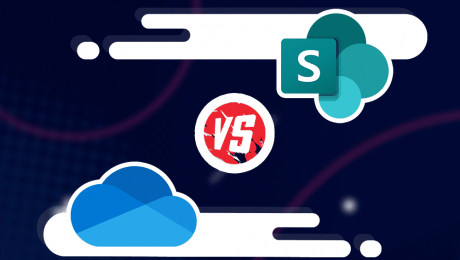
OneDrive and SharePoint are popular Microsoft products that have some crossover features. With that, it’s not always clear what their differences are or how you should use them. To clean up any confusion, we’ve assembled this SharePoint vs OneDrive guide.
This SharePoint vs OneDrive article isn’t so much a head-to-head, but rather a guide that clearly outlines the difference between these Microsoft products. Because the two services are often linked, it’s easy to get confused about what each of them does, and which one (if not both) you should be using.
SharePoint Online and OneDrive are predominantly cloud-based products. They both come with storage space and they both can be a home for documents, images and videos. Despite their similarities, both SharePoint and OneDrive target different audiences. In this piece, we’ll break both services down and give you a clear idea of their features.
While we’ll give you a good chunk of information about both services, it’s worth checking out our individual reviews to really grasp what they’re about. Both our OneDrive review and our SharePoint review will help you decide if either or both services suit your needs.
Microsoft Teams is a communication tool built for instant messaging with team members. SharePoint is a place to build internal communication sites and effectively manage documents. OneDrive is a cloud-based storage solution to back up files online and is suitable for personal, family and business use.
No. The SharePoint platform is designed for advanced document management, whereas OneDrive better serves as a place to upload, share and sync files to the cloud.
Both SharePoint and OneDrive are excellent online tools and excel at what they do. We would only consider SharePoint better for business users looking for advanced document management and communication tools.
While OneDrive and SharePoint both provide an online space to access files, their broader use is what separates them. SharePoint is predominantly an online document management system and communication site. OneDrive is a cloud storage solution that people mainly use to create an online backup of their files.
You may be thinking, but you can create documents in both OneDrive and SharePoint. Yes, this is true. However, the intention of those documents is different.
SharePoint, for example, lets you create what is called a “SharePoint site,” and its features primarily target business use and teams. OneDrive, on the other hand, can serve as personal storage for your Uncle Steve who wants to back up his biking photos and poetry.
That’s not to dumb down what OneDrive is capable of (we’ll go into advanced use shortly), but it should give you a clearer idea of each product’s target audience and how their features cater to each of them.
Microsoft 365 is the main hub that contains a range of Microsoft products, including both OneDrive and SharePoint. You’ll also find software like Word and Excel, plus communication tools such as Microsoft Teams.
You can purchase SharePoint and sign up to OneDrive plans without having to pay for other products. Alternatively, you can subscribe to the range of 365 plans and incorporate all of Microsoft’s productivity and communication tools, plus its project management tool.
Microsoft OneDrive is a mainstream cloud-based service. It can play home for your personal files like photographs, family videos and documents that you wish to create. It’s also an excellent collaboration tool, as it lets multiple users with remote access work on files either simultaneously or at different times.
OneDrive is also useful for anyone who wishes to share files and folders. Take a photographer, for example. If they need to send multiple images to a publisher, they can upload them to OneDrive, send a link to the publisher and grant them access to the images.
Not only is OneDrive a place to store files, it’s also a space to create them. Microsoft integrates the online versions of its Office tools, allowing users to create documents, spreadsheets, presentations and more — directly on the web. Because OneDrive instantly syncs your files, you can access them on multiple devices, including mobile devices.
Beyond storing files, a SharePoint site has several features that make it easier to circulate company updates across your business, as well as being a home for developing business-related documents.
A SharePoint site has two functions. The first is for team collaboration and is known as a SharePoint team site; the other is a communication site, which allows you to ping both short- and long-form updates to your team or whole business.
For documents, think of SharePoint as an online folder system. Remember the days when all your paper files were stored in large filing cabinets? This is the same theory, only the practice is done digitally. Online document storage makes it far easier to be efficient with your sorting of documents, and it’s also more secure and disaster-proof.
If you’re looking to take all your files from your computer and upload them to online file storage, OneDrive is the way to go. It’s also good for freelancers who create documents (writers, for example) and need to share them with clients while also backing them up to the cloud.
OneDrive is also a good option for those looking for personal cloud storage to back up their files from their smartphones. It’s not the only option, however, and those looking for cloud storage for their mobile device should check out our best cloud storage for Android and the best cloud storage iPhone articles.
For those who need an enterprise-level product to manage documents and create intranet pages, SharePoint is the path to take. It’s useful for adding signatures to important business contracts and for building a broader collaborative workspace. On that note, we’ll break down even further what SharePoint has to offer.
As you’ll see below, SharePoint has plenty of features that go beyond what OneDrive can do. We’ll go over the main features to be aware of and provide you with an overview of what each of them can do for you.
Enterprise-grade security is somewhat of a buzz term. It essentially means a company is applying the highest level of security measures to protect your data.
SharePoint uses industry-standard encryption to protect your data both in transit and at rest. It also employs round-the-clock oversight for when security patches are required or customer data may be under threat.
A SharePoint library allows you to create different categories for your documents. This helps you separate financial, legal, training documents, etc. to create a better online filing system.
You can access your document library in your communication and team sites. It’s also possible to manage access for other users, so they can only work within the library you authorize.
Microsoft integrates all the tools needed to create documents directly in SharePoint. Whether it’s a Word document or an Excel spreadsheet, you and your team can be productive without leaving the SharePoint software.
Newly created documents automatically sync to the cloud and they’ll also exist as OneDrive files, allowing you to access them either on SharePoint or the OneDrive platform.
Just like cloud-based storage, SharePoint allows you to share your files with a single user or with groups you have created inside the platform. You’re able to grant permissions for users to edit, view or review the document. If you’re authorized, you can also share files with users outside your organization.
SharePoint is a collaboration tool, and because it’s an online solution, it makes it easy for two or more people to work on the same document simultaneously. This is what SharePoint calls co-authoring, and because it works in real time, you can have one person writing a document and another person editing, for example.
It also includes version history, which is on by default and allows users to view previous versions of documents. It’s a great way to restore documents and remind yourself what changes have been made.
A news post is essentially a blog post that you publish within your company. It’s a good way to craft short- or long-form articles that keep your business teams updated on what’s going on in your company. Making a news post is easy and is done so in blocks, allowing you to blend images, text and videos.
Managing documents comes with many tedious tasks. Thankfully, SharePoint allows you to create many useful automations that remove the need to manually perform certain actions.
For example, you can program SharePoint to send emails for approval when a new document is created or edited. If you’re working with contracts, you can also send automated digital signature requests.
Microsoft has integrated lists inside SharePoint. With lists, you can develop easily digestible content that clearly outlines anything from issue tracking to content scheduling. Microsoft provides you with the option to create a fresh list, or you can use one of the several templates available for a quicker workflow.
If you want to make quick notes for ideas or objectives, you can do so with OneNote. It’s labeled as a NoteBook inside SharePoint. It’s best used for paragraph-sized concepts that you want to make note of for later or to discuss with other members of your team.
If you don’t wish to use the online version of SharePoint, it’s also available as locally installed software. This is referred to as “on-premise software.” This means your IT team has full control over the software and is responsible for things like responding to security breaches, working on updates and patches and performing backups.
You should now have a better understanding of the core differences between OneDrive and SharePoint. They’re both great for file storage and file sharing, but as outlined above, the way you use and implement each software is vastly different.
Those who need more than just a space to store files and work with important documents should of course consider using SharePoint. For those who need a simple space for their range of files and may want some productivity tools, OneDrive will be more than enough.
Did you find this guide helpful? Are there similar comparisons you would like us to write? What’s your favorite document management software? Let us know in the comments. Thanks for reading.
document.getElementById( “ak_js_1” ).setAttribute( “value”, ( new Date() ).getTime() );
Also interesting
Most popular on Cloudwards
© 2007-2022 Cloudwards.net – We are a professional review site that receives compensation from the companies whose products we review. We test each product thoroughly and give high marks to only the very best. We are independently owned and the opinions expressed here are our own.
Because the Cloudwards.net team is committed to delivering accurate content, we implemented an additional fact-checking step to our editorial process. Each article that we fact check is analyzed for inaccuracies so that the published content is as accurate as possible.
You can tell that an article is fact checked with the Facts checked by symbol, and you can also see which Cloudwards.net team member personally verified the facts within the article. However, providers frequently change aspects of their services, so if you see an inaccuracy in a fact-checked article, please email us at feedback[at]cloudwards[dot]net. We strive to eventually have every article on the site fact checked. Thank you.
- Published in Uncategorized