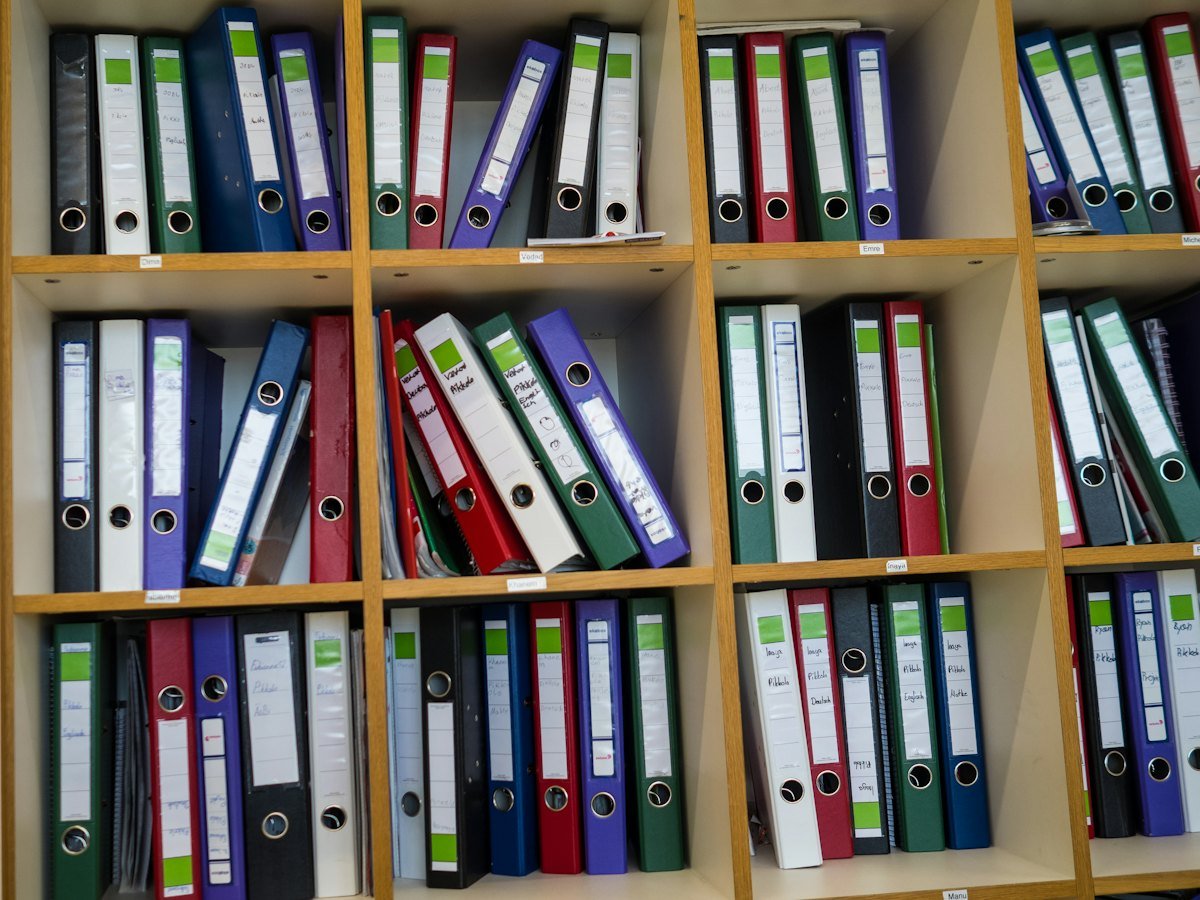
Records management is how an organisation creates, organises, keeps and finally disposes of its records. Done well, the right record is always findable and nothing is kept longer than needed. These ten practices apply to paper and digital records alike.
10 best practices
- List your record types by department: HR, finance, legal, customer, operations.
- Give each type an owner who decides access and retention.
- Classify records by sensitivity: public, internal, confidential.
- Agree index fields so records can be found. See the indexing guide.
- Keep one home for each record, not copies in many folders.
- Control access by role, especially for HR and customer files.
- Set retention periods with your advisers. See the retention schedule guide.
- Digitize what is used often, and keep originals only where required.
- Dispose securely with approval and a certificate: pulping or shredding.
- Review once a year: are rules followed, are periods still right?
Paper and digital together
Most offices run both. A document management system holds the digital records and their retention rules; paper still in use is tracked by the same index fields.
Where to start
Pick the department with the most requests, usually HR or finance, apply these practices there, then expand.
Frequently asked questions
What is records management?
The way an organisation creates, organises, keeps, retrieves and disposes of its records.
Do you offer records management services in Karachi?
Yes: consulting, digitization, DMS setup, retention planning and secure disposal. See records management services.
Do you give legal advice on retention?
No. We prepare draft schedules for review by your legal or compliance advisers.