



Enter your email address to instantly generate a PDF of this article.
With pandemic restrictions easing and the full staff heading back to the office, Laura’s boss decided the time was right to perform some workspace reorganization. He put Laura in charge of going through a bunch of drawers with instructions to make folders to organize papers of current worth, box up other documents that somebody might need down the line, and toss insignificant and old material.
Laura did not think this task sounded too difficult, but by the second drawer, she changed her mind. Many gray areas existed as to what was “important” or “old.” Afraid of making a mistake, she erred heavily on the side of caution. This hesitancy created an abundance of random “stuff” destined to sit in the basement until either some brave soul went on a hunt for something he needed or flooding from a storm damaged the cardboard boxes and rendered the papers inside unreadable.
Upon finishing the project, Laura expressed relief to her friend Jan at lunch. She told Jan how hard it was to figure out a good way to organize timely papers since they often fit multiple categories. She also explained that the only items she actually tossed were some electronic mail printouts from last year that were originally sent to the account of a person no longer with the company. Jan asked about the nature of these messages. Laura said that she did not read them in detail but that they seemed to be rather mean-spirited. Jan bit her lip and hoped that Laura had not accidentally tossed evidence the legal department might need in a harassment lawsuit.
Like many other workplaces, Laura’s office could benefit considerably from implementing electronic records management (ERM). Such a management system utilizes information technology to organize and store records in electronic form. Electronic information management eliminates guesswork by providing systematic storage, maintenance, and disposition of records. Electronic documents are available and retrievable when people need them, and electronic information past its usefulness gets deleted in a purposeful, orderly manner.
Organizations need to keep various records as proof of business processes and activities. These documents act as official records that certain events took place or that proper procedures were followed. Many serve as supporting evidence when the company files taxes or gives reports to other federal agencies. Some need to be easily retrievable should a government agency such as the Department of Labor (DOL) want to check employment verification or the Occupational Safety and Health Administration (OSHA) need to investigate an environmental concern. Internally, anyone from a manager looking for details of past dealings with a specific client to lawyers building a defense for an improper termination lawsuit benefits from the ability to quickly and easily find what they need.
An ERM system enables people to find the right information when they need it. Capturing document metadata facilitates content management and improves identification, categorization, and retrieval. The seeker need not go on a scavenger hunt to multiple places nor worry that additional information exists elsewhere. A properly maintained electronic records management system serves as an efficient one-stop-shop.
Other pros to employing an electronic format include:
Saving space. Paper records can take up a good deal of physical room.
Safety. Fires, floods, and even spilled cups of coffee can render physical copies of documents unreadable.
Access from outside the building. Many businesses operate out of more than one location. Electronic files allow approved people to get what they need regardless of where they are at.
Reducing manual workload. A records management program requiring physical filing and retrieving requires more staff effort and introduces greater potential for human error. Similarly, disposal of physical documents past their life cycle means needing to destroy and haul away mounds of paper.
Avoiding productivity loss. By keeping valuable content organized and discoverable, an audit or compliance request does not create a frenzy that necessitates pulling people away from their regular work to search for relevant material.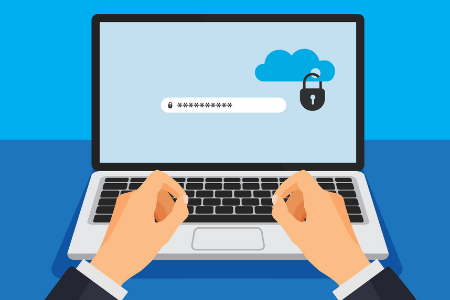
Effective management of electronic records requires an organization to develop specific policies. These policies act as an instruction manual for those involved in managing electronic records. This information also serves as institutional memory. Down the line, people may wonder about the rationale behind recordkeeping decisions they inherited. Knowing, say, how the records retention schedule for a type of document was determined or how individual records management practices came into being clarifies the foundation and assists with future decisions.
Defining what information your organization must keep as a record, the procedures for managing those records, their retention period, and their disposal schedule also gives your organization credibility in the eyes of outsiders. Courts and government agencies frown upon selective deletion by individual employees because such action raises concern about cover-ups. When you can show a thoughtful, organized policy to a relevant third party such as a lawyer or auditor, it backs up your decisions by demonstrating that the business follows a standardized system rather than keeping or deleting information willy-nilly.
As Laura’s situation earlier illustrated, problems can arise when employees are left to their own devices when handling records. They may keep everything because of fear of inadvertently destroying something that should be retained. Or, they may be too quick to dispose of something that to the untrained eye looks old or unnecessary. The first scenario creates a cumbersome mess where finding what you want proves challenging. The second action opens up the company to potential legal and regulatory problems.
Do not expect employees to inherently know what stays and what goes. A good company records policy must define what your organization considers a business record. Basically, the term refers to evidence of business-related activities, such as events, transactions, discussions, and communications. Some types of business records, such as tax forms and legal documents, are relatively easy to spot. Others, such as emails and social media posts, are not so obvious. Be certain employees know not only your organization’s precise definition of a business record but also the various forms such records may take.
Examining legal and regulatory guidelines provides a good foundation for establishing what types of electronic records you need to keep and for how long. Research rather than assume. Requirements may prove surprising, such as certain employee medical records that OSHA wants retained for 30 years.
Since many records pertain to tax issues, people involved in records administration may want to seek guidance from the Internal Revenue Service’s website, IRS.gov. The web page entitled “What kind of records should I keep?” provides small businesses and the self-employed with guidance about recordkeeping of supporting business documents such as gross receipts, purchases, expenses, and assets. Another web page entitled “How long should I keep records?” looks at recordkeeping in regard to the period of limitations (the period of time in which you can amend a tax return to claim a credit or refund or the IRS can assess additional tax). “Employment tax recordkeeping” details what records regarding employment taxes a company should keep for at least four years after filing a return.
Another place to check out is USCIS.gov. This website for U.S. Citizenship and Immigration Services provides detailed information regarding retention rules for I-9 forms, the document used to verify the identity and legal authorization to work of all paid employees in the United States.
Other common types of records to address regarding retention and deletion schedules include:
Records pertaining to time off under the Family and Medical Leave Act (FMLA)
Accommodation requests
OSHA forms
Hiring records (including information on candidates not chosen)
Employee records
Payroll information
Job evaluations
Termination and layoff documentation
Coming up with an electronic records retention and deletion policy is a large and complex procedure. Creators must know which regulations apply to the organization and address them in the policy. This involves reviewing company and HR requirements, state law, federal law, industry regulations, government regulations, and insurance needs before developing record retention policy and procedures. Assembling a team that approaches the process from different angles and spheres of expertise can prove valuable. Gather input from senior management, human resources, IT, records management, and legal/compliance.
Legal consult proves especially helpful in matters involving the organization’s litigation hold policy. Their advice places a destruction hold on electronic documents that should not be deleted because of potential future use. This forward-thinking measure may, for instance, preserve records pertaining to an employee who has expressed concern about harassment in case he or she later takes the matter to court.
As discussed in the previous section, every record has a life cycle — a specific amount of time that it needs to be kept. Holding on to records beyond their retention period results in an ever-increasing need for storage space and lowers retrieval efficiency.
Archives are records that possess an infinite life cycle, meaning they never get deleted. The most well-known place in the U.S. for this type of information is the National Archives and Records Administration (NARA), which holds various government records. Archivists there follow strict protocols to ensure the maintenance and safety of these important public records. Interestingly, of all the documents and materials created in the course of business conducted by the United States federal government, only 1%-3% are so important for legal or historical reasons that they are kept forever. State archives serve a similar function at the state level.
While perhaps not as extensive, businesses also typically have permanent records and benefit from creating archives. Transferring items with this type of legal, fiscal, administrative, or historical value to a place where people can still retrieve them as necessary but do not encounter on a regular basis lowers the chance of accidental deletion.
Electronic records with a limited life cycle do not get archived. Instead, they require thought-out, spelled-out placement in your system. Their retention and deletion follow guidelines adhered to by everyone at the company.
Security
Keeping records safe from internal or external theft or unauthorized changes has always been a concern and remains so for electronic documents. While worrying about someone stashing physical copies in his briefcase is no longer the issue when using an ERM system, computer breaches are equally problematic.
Companies must take measures to prevent outsiders from gaining access to electronic files. Software applications such as encryption tools help by making a document intercepted over an open network inaccessible or unreadable. Businesses also must vehemently control access by their own employees. Only relevant parties should be set up with login permission and the information on how to get in – with strict warnings against unauthorized sharing.
Since viruses also can wreak havoc on electronic files, IT personnel should install effective security software and keep it up to date. Companies commonly make backup copies of files in the event a problem occurs. If using cloud-based storage, do research before selecting a provider. Choose a reputable provider that can clearly tell you the security measures it takes.
In addition to implementing various technical measures against theft or tampering, smart organizations also know the importance of monitoring. They run reports that track every action taken on each document throughout its life cycle, who performed the action, and when it took place. Appropriate leaders and gatekeepers can look at these reports for questionable or suspicious activity.
With its many benefits, electronic records management certainly seems like the wave of the future. This begs the question, “Are there any documents to still keep in physical form?” Opinions vary, but experts often recommend hard copies of:
Annual reports
Insurance documents
Employer identification numbers (EIN)
Contracts
IRS and government correspondence
Tax returns
Articles of incorporation
Documents with raised seals
Business licenses and other documents required by law to be displayed
International financial documents (some countries have specific requirements about electronic vs. paper copies)
Mortgages
Leases
Whatever papers you choose to keep in physical form, make sure to store them in a fire-resistant container or cabinet placed in a dry, temperature-controlled area. Laura’s cardboard box in a leaky basement is not a good relocation choice!
Instantly access free expert advice, management strategies and real-life examples of workplace success.

October 25, 2022 09:02 ET | Source: Intapp Inc. Intapp Inc.
Palo Alto, California, UNITED STATES
PALO ALTO, Calif., Oct. 25, 2022 (GLOBE NEWSWIRE) — Intapp (NASDAQ: INTA), a leading provider of cloud-based software for the global professional and financial services industries, today announced that London-, Kent-, and Sussex-based accounting, business, and wealth advisers Kreston Reeves has selected OnePlace Collaboration & Content to provide a collaborative, engagement-centric document management solution and help the firm maximize its Microsoft 365 platform investment.
Kreston Reeves is an award-winning firm providing accountancy, business, and wealth advice to businesses, not-for-profit organizations, individuals, and families. It will use Intapp products in tandem with Microsoft Teams, SharePoint, Outlook, and Office to better connect the people, processes, and data involved in each engagement.
Intapp collaboration and content products simplify collaboration, enhance compliance, automate governance, and help professional services firms deliver more productive, profitable engagements. As a part of this suite, Kreston Reeves will use the following components:
“As we adopted Microsoft 365 to play a central role in enabling a secure, collaborative, and modern work environment, it became clear that we needed to extend the capabilities of the solution for our unique needs as an accounting firm,” said Chris Madden, Chief Technology Officer and Operations Director at Kreston Reeves. “OnePlace Collaboration & Content will supercharge our Microsoft investment, enabling intuitive, centralized, engagement-specific workspaces with intelligent file management.”
“We are thrilled that one of the leaders in the midmarket accounting space is adopting OnePlace Collaboration & Content to enhance collaboration, document management, and knowledge management across the firm,” said Alan McMillen, General Manager, Collaboration and Content Solutions at Intapp. “Intapp’s alignment with Microsoft applications will boost productivity and focus for Kreston Reeves professionals by eliminating the need to switch between platforms when managing documents and communications.”
Kreston Reeves will work with Transform Data, an Intapp partner that resells and implements enterprise content, collaboration, and automation technology, to migrate existing data stores to Microsoft SharePoint. Transform Data’s specialists will strengthen the firm’s investment in Microsoft 365 by ensuring the optimal flow of data firmwide to facilitate effective document, email, and case management functionality.
About Intapp
Intapp makes the connected firm possible. We help professional and financial services firms better connect their people, processes, and data through AI-powered software solutions. Trusted by more than 2,100 of the world’s premier private capital, investment banking, legal, accounting, and consulting firms, Intapp offers an end-to-end solution purpose-built to help modernize these firms. Intapp facilitates greater team collaboration, digitizes complex workflows to optimize deal and engagement execution, and leverages proprietary AI to help nurture relationships and originate new business. Intapp helps firms increase profitability and investment returns, operate more efficiently, and better manage risk and compliance. For more information, visit intapp.com and connect with us on Twitter (@Intapp) and LinkedIn.
Intapp and OnePlace are registered trademarks of Integration Appliance, Inc., or its subsidiaries. Various trademarks held by their respective owners.
About Kreston Reeves
Our purpose is to guide our clients, colleagues, and communities to a brighter future. We help dynamic businesses, charity and not-for-profit organizations, private individuals, and families with accountancy, business, and wealth advice. Offices in London, Kent, and Sussex. Website: www.krestonreeves.com
About Transform Data International:
Transform Data’s solutions and services strengthen the adoption of Microsoft 365 and SharePoint. As a leading partner of Intapp’s Content & Collaboration suites, we have been migrating clients from legacy platforms to SharePoint for 8 years. We help organizations optimize their employees’ total productivity by combining documents, tasks, workflows, external data, and reports into one context-based user interface. Offices London & Maastricht. Website: www.transformdata.eu
Media Contacts:
Kreston Reeves
Matt Baldwin, Coast
matt@coastcommunications.co.uk
4407930 439739
Intapp
Ali Robinson
Global Media Relations Director, Intapp
press@intapp.com
678-909-0703

If you’re on a Galaxy Fold, consider unfolding your phone or viewing it in full screen to best optimize your experience.
Credit Cards
Banks
Brokers
Crypto
Mortgages
Insurances
Loans
Small Business
Knowledge
by Rose Wheeler | Updated Aug. 5, 2022 – First published on May 18, 2022
Image source: Getty Images
Taking your business documents online with a document management tool is a crucial step that will declutter your office and keep your files secure.
Business documents pile up, and the opportunity for lost files or a lack of accountability in tracking is a threat in a paper-run world. However, setting up a paperless system takes planning and implementation.
Business document management lets you use a cloud-based system to store, edit, manage, send, and track electronic documents, from invoices to contracts to HR records. Business document management is the digital answer to paper storage.
By following best practices to manage documents, you can set your business up for streamlined success. Like anything new, you must take stock of what you have, make a list for what you need, and schedule time to learn so you can make the transition seamless.
Step one involves putting your plan onto paper. Before you can jump into action, you need a full outline.
After you know what you need and want, your next move is to pick the file organizer system. You must consider features, integrations, and capabilities before choosing a winner.
After you’ve done the prep work, it’s time to set things up in the office, from file transfers to how the system syncs with your current tools.
After your system is set up, it’s time to upload, store, and share files. It’s important to keep things organized. The same care and order you used to transfer files should also carry over to ongoing storage.
Ignoring maintenance and upkeep will lead to an unorganized mess. You’ll need regularly scheduled upkeep to make sure things are staying streamlined.
For document management, you need the right online filing system for your business. Considering things such as cost, capabilities, scalability, and more, here are three top choices you’ll want to explore.
eFileCabinet is built for efficiency and centralizing document management. It’s easy to set up and install, and just as easy to navigate.
You can migrate files, archive as needed, and search from a streamlined interface. Administrators can audit file histories and track edits using custom links.
Save time and desktop space by uploading simply with Sidekick. Image source: Author
eFileCabinet also uses an open source document management API (application programming interface), so any software can connect to it. You can drag and drop files off your desktop into an uploader without having to dive into eFileCabinet via a browser using its Sidekick application.
Box is an efficient and easily integratabtle solution. Beyond the basics of uploading, sharing, and editing documents, you can expand your capabilities by setting up workflows, tracking document history, creating multiple user permissions, making custom outbound links, and more.
Its interface is easy to use, as the toolbars are intuitive and straightforward. Uploaded documents have full navigation bars that can be accessed on a file-by-file basis or for entire folders at once. Directly send items or share clickable links with others that carry a range of permissions, from viewing to editing.
Sharing documents is made simple with Box’s easy-to-use interface. Image source: Author
It’s an affordable option, too, with a free plan for personal use, and its cheapest paid option being only $5/month per user, with at least three users.
DocSend places a high value on ease of use, as it syncs right into your existing software structure. By integrating with the systems you’re already using, the learning curve is super minimal.
Customized permissions, per share, help keep your data protected. Image source: Author
Plus, it lets you customize permissions that can be toggled on and off. You can set up email verification and even visibility expirations, protecting sensitive information. It starts at $10/month per user.
Taking your business into the security of the digital age is as simple as setting up document management software. You can easily transition your physical files into a searchable and secure digital bank by planning out your organization categories and conventions.
Cash back, travel rewards, 0% intro APR financing: all of these can be great credit card perks for business owners. But how do you find the right business credit card for you? There are tons of offers on the market today, and sifting through them to find the right one can be a big hassle. So we've done the hard work for you.
Get started with one of our top business credit card picks of 2022 today.
Rose Wheeler is a content management expert writing for The Ascent and The Motley Fool.
We’re firm believers in the Golden Rule, which is why editorial opinions are ours alone and have not been previously reviewed, approved, or endorsed by included advertisers. The Ascent does not cover all offers on the market. Editorial content from The Ascent is separate from The Motley Fool editorial content and is created by a different analyst team.
The Ascent is a Motley Fool service that rates and reviews essential products for your everyday money matters.
Copyright © 2018 – 2022 The Ascent. All rights reserved.
