Gerta Zaimi
On Sept. 7, Albanian Prime Minister Edi Rama announced in a video statement that a series of damaging hacks of the country’s critical digital infrastructure earlier that summer had been attributed to the Islamic Republic of Iran (IRI), and as a result, his government was terminating diplomatic relations with the Tehran — arguably one of the most profound responses that a sovereign state might take to a cyberattack. Iranian foreign ministry spokesperson Nasser Kanaani condemned Tirana’s decision as “unfounded,” adding that it “only serves the American and Israeli conspiracy.”
But undercutting Kanaani’s denial, just three days later, an Iranian-linked group of hackers calling itself HomeLand Justice targeted a restricted database administered by the Albanian police, before posting the ransacked information to Telegram over the coming weeks.
On Sept. 19, a dozen days after Albania broke off diplomatic relations with the IRI, HomeLand Justice published on its Telegram channel a 47-page document of stolen data. The file contained personal identifying information as well as records of the border crossings of the former general director of the State Police of Albania (Policia e Shtetit), Gladis Nano, and his family.
Less than a month later, on Oct. 3, the same group of cyber actors released another voluminous document, this one over 1.7 gigabytes in size, which exposed 300 identities of persons suspected of criminal acts in Albania. That data dump strongly suggested the hackers had broken into Albania’s sophisticated police communication system called Memex, raising strong concerns about national data protection measures.
More periodic leaks followed. On Oct. 19, the hackers published a file linked to the director of Albanian intelligence, Helidon Bendo, that contained 17 years’ worth of data (2005-2022) from the government’s Total Information Management System (TIMS), again exposing logged entries and exits at the state border. On Nov. 2, the group raised the stakes again by releasing the identities and personal details of 600 Albanian intelligence officers, including their names, emails, and phone numbers. Six days afterward, HomeLand Justice released a video of an Albanian intelligence operation in collaboration with the State Police, which featured footage of then-police chief Nano.
As the Albanian prime minister’s Sept. 7 statement made clear, the early autumn cyberattacks and leaks were not the first time that HomeLand Justice made itself known in the country. Previously, its affiliated hackers had stolen correspondence between ministries, embassies, and even Prime Minister Rama’s emails with Albanian citizens. Each time, the group made these public on Telegram. And on July 15, the offensive cyber actor tweeted that it was planning to carry out cyberattacks against Albania’s digital development and administration body, the National Agency for Information Society (AKSHI). After those summer-time incidents, Albania hired American cybersecurity and software companies Mandiant and Microsoft to investigate.
Iran caught red-handed
Mandiant’s and Microsoft’s reports as well as a separate investigation by the United States’ Federal Bureau of Investigation (FBI) and the Cybersecurity and Infrastructure Security Agency (CISA) all came to the same conclusion: Iranian state cyber “actors” — identified as HomeLand Justice — had taken down the websites and services of the government of Albania in July 2022. Mandiant experts believe that the individuals who carried out these attacks wanted to retaliate against the Albanian government for sheltering the Mujahedin e-Khalq (MEK), an Iranian opposition group currently residing in Manëz, Albania.
The FBI-CISA’s report, in turn, reveals that Iranian proxies apparently gained initial entry into the Albanian state network approximately 14 months before launching its devastating cyberattack last summer. The hackers then maintained continuous access to the network.
Experts in the cybersecurity field assess the IRI’s cyberwarfare capabilities as highly effective, even in comparison to traditionally more sophisticated powers like China, Russia, Israel, or the U.S. And like many of these other powers, Iran’s approach in this domain has been to rely on proxy actors to achieve strategic objectives. It has regularly responded to sanctions or perceived provocations through cyberattack campaigns. Indeed, both of these modus operandi were visible in the case of Albania, which is guilty in the Iranian authorities’ eyes for the accommodations this Balkan country has been giving to the MEK.
MEK and Albania
The MEK was founded in Iran in 1965 by radical Iranian students whose shared ideology combined Marxism and Islam. Between 1980 and 1981, the organization gained popular support and emerged as a political-militant opposition force to the new theocratic regime, at which point its adherents were forced to seek exile abroad, eventually ending up in Saddam Hussein’s Iraq, amidst the Iran-Iraq war (1981-1988).
Under intense lobbying from the group and in return for renouncing violence, the United States removed the MEK from its list of terrorist organizations in 2012, where it had been since 1997. Following Saddam’s toppling, the MEK needed to be pulled out of Iraq. The U.S. asked several countries to offer asylum to the group, including Romania. But worried about the possible security consequences involved, Bucharest demurred, prompting Washington and the United Nations to turn to Tirana.
The Albanian government publicly disclosed parts of this deal in March 2013. In agreement with the American authorities, the transfer to Albania of more than 2,000 Iranian mujahedin began in 2016. Soon thereafter, the MEK built the “Ashraf 3” camp in the Manëz area, between Tirana and Durrës.
Undoubtedly, the MEK’s arrival and regrouping in the small Balkan state could not pass without consequences. Giving shelter to the largest Iranian opposition faction, which presents itself as a future government-in-exile, organizes annual political summits, and allegedly carries out cyberattacks against the IRI, automatically pitted Tirana in a diplomatic dispute with Tehran. Over the years, this conflict metastasized, including into the theater of cyberwar.
The consequences of Albania’s hospitality
After Albania severed diplomatic relations with the IRI in early September, Iran’s foreign ministry stated that the charges leveled against the Islamic Republic would “give full support to a terrorist sect,” referring to the MEK, which “continues to play a role as one of America’s tools in perpetrating terrorist acts, cyberattacks” against Iran.
This implicitly served as an admission of guilt by Tehran for the summer-time cyberattacks as well as confirmed the reason behind them. In fact, Iranian covert activities against Albania had been growing for years since the arrival of the MEK to the Balkan country.
In 2018, Albania expelled Gholamhossein Mohammadnia, then the Iranian ambassador to Tirana, and Mostafa Roudaki, the station chief of the Iranian Ministry of Intelligence and Security (MOIS), describing them as “undesirable elements” involved in “illegal actions against [Albanian] national security.” In 2020, other evictions took place. Two diplomats of the Iranian embassy, Mohammad Ali Arz Peimanemati and Seyed Ahmad Hosseini Alast, were forced to leave Albania and declared persona non grata.
That same year, Danial Kassrae, an Iranian with Italian citizenship, was deported from Albania, accused of espionage on behalf of MOIS to gather information on the MEK. In October 2020, Albanian authorities arrested Iranian citizen Bijan Pooladrag on five charges related to terrorism and tampering with computer data. Last week, Pooladrag was sentenced to 15 years in prison. He was declared guilty of the charge of financial actions with persons or organizations related to terrorism and of participating in a terrorist organization.
In 2021, three Iranian journalists, Mohammad Alavi-Gonabadi, Firouz Baghernejad, and Mohammad Heydar Allauddin, were deported from Albania. All three supposedly worked for MOIS and sought to gather information on the MEK.
In July 2022, the Albanian Special Anti-Corruption Structure (Struktura e Posaçme Anti-Korrupsion, SPAK), an independent judicial entity tasked with investigating high-level corruption and organized crime, at the request of the Special Prosecutor’s Office, detained and interrogated 20 Iranians, all former MEK members, for espionage in the service of the Iranian regime.
Additionally, the annual MEK summit, scheduled to be held later that same month, on July 23-24, at Camp Ashraf 3 in Manëz, was postponed (finally held on Sept. 5) due to an apparent threat of a terrorist attack against the proceedings. The decision was motivated by the Albanian government’s recommendation as well as a July 21 warning from the U.S. embassy that the IRI was allegedly planning to violently disrupt the event. A few days later, the Iranian news agency Fars, which is associated with the Islamic Revolutionary Guard Corps (IRGC), asserted that Iran could attack the MEK in Albania with drones and missiles.
Evidence of Iran’s special operations targeting Albania continued to mount over the following weeks. In August, the Albanian police detained Batool Soltani and her husband, Afshin Kalantari, the former holding dual Iranian-German citizenship, and held them for 72 hours before deporting them to Germany. Albanian police identified them as a national security risk and suspected them of trying to carry out terrorist attacks in the country.
Soltani and Kalantari had come at the invitation of the Association for the Support of Iranians Living in Albania (ASILA), a Tirana-based organization founded in November 2021 that claims to assist former MEK members who left the group as well as to promote cultural exchange between Iran and Albania. However, Albanian authorities have long suspected ASILA of creating an agent network with the goal of obtaining detailed information about MEK members living in the camp in Manëz. At the same time, SPAK is actively investigating ASILA’s ties to the Iranian government. Indeed, ASILA’s own activities are conspicuously promoted online by the Nexhat Association, an organization based in Tehran whose stated aim is “rescuing comrades who are still subjectively and even objectively enslaved by this Organization [the MEK] and to help their suffering families.”
Conclusion
Going forward, Iran’s attacks on Albania can be expected to continue but probably at a lower intensity. This is mainly because Iranian intelligence has lost much of its presence on the ground following the closure of the IRI embassy — a presence built up and cultivated over three decades and one that local proxy networks cannot replace. The main weapon left in Tehran’s hands is, thus, hacking and sabotage of national computer networks.
Albania became an Iranian target in the first place because it agreed to host the Iranian opposition group MEK on its territory, because it is an enthusiastic member of the North Atlantic Treaty Organization (NATO) — which Supreme Leader Ali Khamenei notably vilified last summer, in the presence of Russian President Vladimir Putin — and because Tirana steadfastly stands as one of the key supporters of American interests in the Western Balkans, where the IRI seeks to pursue both covert and overt interests.
Consequently, Albania needs more support in the cybersecurity realm from the U.S. and its allies not only financially but also in terms of improving its domestic knowledge and technology base. Undoubtedly, the Alliance has taken this year’s cyberattacks against Albania seriously, as emphasized in a Sept. 8 statement by the North Atlantic Council: “We will continue raising our guard against such malicious cyber activities in the future, and support each other to deter, defend against and counter the full spectrum of cyber threats, including by considering possible collective responses.”
So long as Albania remains in Tehran’s sights, the country will continue to depend on allied support in the cyberwarfare space.
Gerta Zaimi researches International Relations, the Middle East, and the Balkans at the Centro Interdipartimentale di Studi Strategici, Internazionali e Imprenditoriali (CSSII), Università di Firenze, in Italy
Photo by YUKI IWAMURA/AFP via Getty Images
The Middle East Institute (MEI) is an independent, non-partisan, non-for-profit, educational organization. It does not engage in advocacy and its scholars’ opinions are their own. MEI welcomes financial donations, but retains sole editorial control over its work and its publications reflect only the authors’ views. For a listing of MEI donors, please click here.
Sign up to receive the latest publications, event invitations, and our weekly newsletter delivered to your inbox.
languages@mei.edu
202-770-0344
rdooley@mei.edu
202-785-1141 x241
mej@mei.edu
202-785-1141 x205
events@mei.edu
202-785-1141 x202
development@mei.edu
202-785-1141 x203
info@mei.edu
202-785-1141
Middle East Institute
1763 N St. NW, Washington D.C. 20036
© 2018 Middle East Institute All Rights Reserved | Accessibility Policy | Built by Social Driver.

Powerland, a leading IT infrastructure provider in Canada and a Xerox Business Solutions Company, has been named Canada HPE GreenLake Partner of the Year 2022 from Hewlett Packard Enterprise (HPE) as part of the broader HPE Partner of the Year Awards program.
Hewlett Packard Enterprise (HPE) announced the winners of the HPE Partner of the Year Awards 2022 in recognition of HPE partners who exemplify commitment and success in delivering value to their customers on their digital transformation journey. This recognition has been given to HPE partners who have achieved exceptional results in financial performance, innovative solutions and meaningful business results.
“We’re proud that Powerland has been recognized as a strong partner for its infrastructure as a service through HPE GreenLake, which showcases our ability to enhance business outcomes for our growing network of customers,” said Martin Bachant, president, Xerox Canada. “While companies are faced with an increasingly complex suite of services as they continue to prioritize IT services that support and scale their operations, Powerland is committed to managing the technology so that companies can focus solely on managing their business. We are honored that HPE has recognized Powerland’s leadership position in this important category.”
Xerox acquired Powerland in February 2022 as part of a larger strategy to expand the company’s IT services in North America. Powerland joins Xerox as a Xerox Business Solutions company focused on providing cloud, cyber security, end user computing and managed services locally to clients. Under the Xerox umbrella, Powerland has continued to serve as a strategic partner to HPE, helping to empower customers through efficient solutions that help them meet their business goals and deliver better customer experience.
“The HPE portfolio and specifically GreenLake has provided a strong complimentary suite of solutions to Powerland’s go to market strategy,” said Ashley Penner, chief executive officer, Powerland. “We continue to focus on our ‘as a service’ offerings to provide our customers with leading edge technology that can be operationalized and managed on their behalf.”
“It is an honor to celebrate the winners of the HPE Partner Awards this year as the channel once again has shown the ability to adapt, transform and grow together.” said George Hope, Worldwide Head of Partner Sales, HPE. “Our partner ecosystem remains at our core, and the winners of the partner awards this year have best demonstrated success through partnering with HPE as one team. HPE remains committed to delivering the best partner experience with opportunities for all partners to grow and succeed with us.”
HPE Partner Awards winners were announced at the HPE Partner Growth Summit that took place on June 27th. A full list of this year’s winners can be found here.
Learn more about Powerland here and all of Xerox Business Solutions’ offerings here.
About Xerox Holdings Corporation (NASDAQ: XRX)
For more than 100 years, Xerox has continually redefined the workplace experience. Harnessing our leadership position in office and production print technology, we've expanded into software and services to sustainably power today's workforce. From the office to industrial environments, our differentiated business solutions and financial services are designed to make every day work better for clients — no matter where that work is being done. Today, Xerox scientists and engineers are continuing our legacy of innovation with disruptive technologies in digital transformation, augmented reality, robotic process automation, additive manufacturing, Industrial Internet of Things and cleantech. Learn more at xerox.com.
About Hewlett Packard Enterprise
Hewlett Packard Enterprise (NYSE: HPE) is the global edge-to-cloud company that helps organizations accelerate outcomes by unlocking value from all of their data, everywhere. Built on decades of reimagining the future and innovating to advance the way people live and work, HPE delivers unique, open and intelligent technology solutions as a service. With offerings spanning Cloud Services, Compute, High Performance Computing & AI, Intelligent Edge, Software, and Storage, HPE provides a consistent experience across all clouds and edges, helping customers develop new business models, engage in new ways, and increase operational performance. For more information, visit: www.hpe.com
-XXX-
© 1986 – 2022 Xerox Corporation. All rights reserved. Xerox® is a trademark of Xerox Corporation in the United States and/or other countries.

Sunshine and clouds mixed. High 48F. Winds SSW at 5 to 10 mph..
Clear to partly cloudy. Low 34F. Winds light and variable.
Updated: December 28, 2022 @ 8:17 am
The Whip Around Wallet is a document storage and management solution for Fleet Managers and Drivers that’s available on web and mobile.
The Whip Around Wallet is a document storage and management solution for Fleet Managers and Drivers that’s available on web and mobile.
CHARLOTTE, N.C.–(BUSINESS WIRE)–Dec 1, 2022–
Whip Around launches new document management solution for Fleet Managers and Drivers, a move designed to improve compliance and ensure their drivers are road ready at all times.
This press release features multimedia. View the full release here: https://www.businesswire.com/news/home/20221201005035/en/
The Whip Around Wallet is a document storage and management solution for Fleet Managers and Drivers that’s available on web and mobile. (Photo: Business Wire)
Poorly managed or missing documentation consistently features in the top roadside enforcement violations each year with in-cab documents relating to the driver and asset prone to damage, expiration or misplacement. Companies are liable for the actions of their employees, and can be held accountable if a non-compliant driver is operating an asset or unable to produce the required paperwork during a roadside check. With so much paperwork involved, it’s a challenge for drivers to store and manage it easily on the go, often putting themselves under the risk of scrutiny.
Steve Keppler from Scopelitis Transportation Consulting emphasized the growing issue of paper-based record keeping and FMCSA compliance, “Fleets that use paper-based recordkeeping tend to have more challenges recording data, maintaining records, missing important deadlines, locating proper records on request, and easily identifying compliance gaps in documents and dates. Using an electronic system addresses all of these weaknesses. It helps carriers be proactive to keep them compliant and identify issues early on before they become a problem.”
Whip Around Wallet is available on web and mobile. Documents are safely stored in the cloud and they can be tagged, making it quick and easy for drivers to access all the documentation that they need while out on the road. Accessibility is critical to document management, but the real value of Wallet lies in the ability to set expiration dates, renewal notifications and retention sunset reminders on documents. This dramatically lowers the risk of not meeting compliance requirements and the cost that goes along with it.
“It definitely helps our drivers remain compliant. It’s really easy to use, and made us a lot more organised. We can check that we’ve got all the required paperwork, and if we’re missing something from one truck we can grab it ” – Ryan Weinstein from M&M Waste.
A range of documentation can be stored in Wallet so that it’s easily accessible during a roadside check or audit.
Some of these include:
“With Whip Around Wallet Fleet Managers can have peace of mind that they have set their team’s up for success. It’s another step towards Whip Around’s promise to help customers take control of their fleet maintenance processes, improve safety and compliance, and reduce costs and downtime” – Elizabeth Santorelly VP Product, Whip Around.
To learn more about the Whip Around Wallet, email sales@whiparound.com or call 704 489 3268. Existing customers should contact their Account Manager or email support@whiparound.com for further details.
About Whip Around
Whip Around is a powerful, yet easy-to-use fleet maintenance software solution that connects drivers, mechanics and fleet operators to improve the uptime across their fleet operations. Whip Around operates in North America and Australasia and serves hundreds of thousands of users and assets worldwide across all commercial fleet industry verticals. The company’s mission is to keep the world’s fleets moving by accelerating information.
View source version on businesswire.com:https://www.businesswire.com/news/home/20221201005035/en/
CONTACT: Lauren Yeoman
704.412.3986
Lauren.yeoman@whiparound.com
KEYWORD: NORTH CAROLINA UNITED STATES NORTH AMERICA CANADA
INDUSTRY KEYWORD: COMMERCIAL BUILDING & REAL ESTATE CONSTRUCTION & PROPERTY AGRICULTURE NATURAL RESOURCES ENVIRONMENT OTHER TRANSPORT TRUCKING APPS/APPLICATIONS LOGISTICS/SUPPLY CHAIN MANAGEMENT TRANSPORT MOBILE/WIRELESS OTHER ENERGY SOFTWARE FLEET MANAGEMENT UTILITIES OIL/GAS COAL ALTERNATIVE ENERGY AUTOMOTIVE ENERGY DATA MANAGEMENT PUBLIC TRANSPORT TECHNOLOGY SUSTAINABILITY GENERAL AUTOMOTIVE GREEN TECHNOLOGY
SOURCE: Whip Around
Copyright Business Wire 2022.
PUB: 12/01/2022 07:04 AM/DISC: 12/01/2022 07:04 AM
http://www.businesswire.com/news/home/20221201005035/en
Copyright Business Wire 2022.
Your comment has been submitted.
Reported
There was a problem reporting this.
Log In
Keep it Clean. Please avoid obscene, vulgar, lewd, racist or sexually-oriented language.
PLEASE TURN OFF YOUR CAPS LOCK.
Don't Threaten. Threats of harming another person will not be tolerated.
Be Truthful. Don't knowingly lie about anyone or anything.
Be Nice. No racism, sexism or any sort of -ism that is degrading to another person.
Be Proactive. Use the 'Report' link on each comment to let us know of abusive posts.
Share with Us. We'd love to hear eyewitness accounts, the history behind an article.
Get up-to-the-minute news sent straight to your device.
Please disable your ad blocker, whitelist our site, or purchase a subscription
Sorry, an error occurred.
News from around the State and World. What you need to know for today! Don’t Miss it!
Find out what’s happening around the state with this weekly email alert sent every Thursday evening!
Sign up to get our statewide obits delivered to your inbox daily.
Sign up to receive our daily newsletter about all things business and politics in West Virginia.
Morgantown News Delivered Each Day!
Morgantown News Delivered to Your Inbox Each Week!
Special offers from businesses around your area.
Get the latest headlines on local WVU, College and High School sports!
Get latest breaking news from around the state when it happens.
Daily News, Sports and Events from The ET.
Sign up for the only WV Government and Business newsletter delivered each week!
This week’s most popular news from around the State. Don’t Miss it!
Daily updates from Blue Gold News for WVU sports.
Daily News, Sports and Events for Marion County.
Weekly Fairmont news emailed every Thursday evening!
Daily News, Sports and Events for Garrett County and surrounding areas.
Find out what’s happening in Garrett County with this weekly email alert!
Get the Jackson Star & Herald Delivered to your email everyday!
Get the Jackson News Weekly delivered to your inbox!
Daily news from the Mineral News & Tribune delivered to your email!
Get the news for Mineral County, Keyser and Frankfort delivered to your email on Tuesdays and Fridays!
Daily News, Sports and Events for Preston County.
Weekly email alert sent every Tuesday and Friday afternoon for Preston County!
Get the River Cities Tribune & Register Delivered to your email everyday!
Get the River Cities Tribune and Register Delivered to your email less frequently!
Daily News, Sports and Events for Weston and Surrounding areas.
Weekly newsletter for Weston.
Sign up for local job offers sent to your inbox.
Area listings from Your Bulletin Board with regular updates
Sign up with
Thank you .
Your account has been registered, and you are now logged in.
Check your email for details.
Invalid password or account does not exist
Sign in with
Submitting this form below will send a message to your email with a link to change your password.
An email message containing instructions on how to reset your password has been sent to the e-mail address listed on your account.
Secure & Encrypted
Secure transaction. Cancel anytime.
Thank you.
Your purchase was successful, and you are now logged in.
A receipt was sent to your email.
Subscribe and get breaking news, commentary, and opinions on law firms, lawyers, law schools, lawsuits, judges, and more. Today’s law firms are increasingly implementing customer relationship management (CRM) tools to save costs, improve efficiency, and more. Matterly is raising the bar when it comes to law firm software by offering one of the most comprehensive and user-friendly solutions on the market, built on the powerful Salesforce platform.
We recently sat down with the co-founders of Matterly, Steven Berkovitch and Ariel Bouskila, and Matterly developer Stratten Waldt to discuss why they created Matterly and how it’s changing the face of legal CRM.
Can you give us an overview of why you formed your firm BBLaw and created Matterly?
Steven Berkovitch
Steven: We started BBLaw back in 2015. We landed in a very unique industry, specialty financing and fintech. Our clients are in the business of financing and funding small businesses across the country through a variety of means. We started out like every good small firm, keeping track of everything in a handy spreadsheet.
Ariel: When we first started, our clients were funding lots of small businesses. Dozens of matters quickly became hundreds, and it snowballed from there. We realized we didn’t have a good way to keep track of it all – how do I know what my next tasks are? How do I follow up on the things that I need to keep track of, like court dates, due dates for discovery, and court appearances? Time tracking and billing was another big issue – we were doing that on spreadsheets as well. Now we had multiple different spreadsheets with multiple different tabs and we never knew where to look. So, we sent Steven out to a conference to look for a CRM tool.
Steven: We were looking for internal purposes as well as for our clients’ benefit. Updating them on the status of their cases had started to consume most of our day instead of actually getting work done. I was surprised at the CRM options I saw – they were very outdated. Each could only handle some of the tasks we needed and didn’t offer the integrations we wanted. We eventually found Salesforce, which allows you to custom build almost anything you want. Because our practice was so unique, we really had no choice but to build our own CRM.
Once we learned to use Salesforce and realized its benefits, we were able to build what we didn’t realize at the time was cutting-edge software. We thought it was software every law firm should have, but little did we know that we actually had something that nobody else was using and something that was really useful. I would talk to friends and realized they were trying to jerry-rig the same kind of solution from things available on the market. Our goal became to combine legal billing software, case management software, legal intake software, and document management into a single CRM product, which became Matterly.
Ariel: We realized that, not only does our software work for us in our unique space, it works as general law firm software as well.
How did you decide to go from it being an internal tool to a tool you marketed?
Steven: Pre-COVID, when unemployment was at its lowest, we were having difficulty finding office staff for administrative tasks like calendaring. We were forced at that point to use technology to fill those gaps. Once we started going down that path, we realized that, in addition to cost savings, it created efficiency and employee happiness, because no one got stuck doing mundane administrative tasks that weren’t part of their job description.
The law firm software we built was great and we kept tweaking it to make it better, aiming for full automation and complete ease of use. Eventually we realized that although the software was initially designed for our firm, and our needs it was something that every firm needed. Matterly’s role is to take all those administrative duties away from people and have them automated to expedite the completion of the tasks and promote efficiency.
Ariel Bouskila
Do you still use Matterly at your firm and why?
Ariel: I use it all day, every day. Our firm is still growing, and there’s only so much that can be done by hiring more administrative assistants, paralegals, or even lawyers. Matterly allows Steven and I as partners at the firm and our clients to get an overview of everything that’s happening at the same time. I can run reports and see what cases are out there. If an action was filed, I can run reports to see what my next court dates are. It helps a lot in terms of planning and organization, as well as for being able to process the amount of cases that we handle.
Stratten Waldt
Stratten: The technology itself is a multiplier. We have about 20 employees right now and more than 20,000 cases in the system. We’ve successfully closed probably 1,000 cases per person over the past couple years.
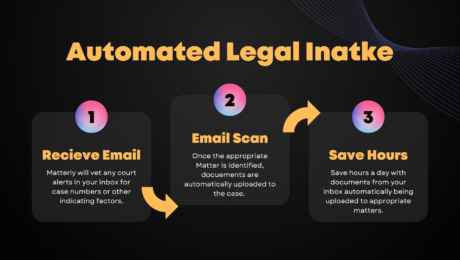
Steven: I don’t think any similar firms can come close to what we do. We have an email parser that allows us to automatically take information like dates that come in emails from the court system and automatically populate them into Matterly, matched to the case’s index number or caption. We’ve partnered with a nationwide process server company to automatically collect summonses and complaints, send them out for service and trigger dates into the system. These are things that are normally done by humans at most firms, which takes time and costs money. More than that people can make mistakes and certain things caneasily get missed when you get several emails every minute from the court systems. We don’t like to miss anything.
Who can benefit the most from Matterly?
Steven: The nice thing about Matterly is that there are certain components geared toward specialty practices, but also a general platform suitable for lawyers who do standard hourly billing. We built in a time management system with time tracking capability. It’s legal billing software that really works for smaller or larger firms. You can assign specific employees to certain cases and limit access rights to cases as needed.
Management can view everybody’s time in a single report or compare users by billing and time usage. If you think matters are being overbilled or underbilled, you can compare all that information in a simple report. Another great thing is that you can give your clients access to their own files, giving them full visibility and removing guesswork when they receive bills. They can see their own court dates and receive automatic alerts for important case activity or deadlines. It’s all about being open and giving them the ability to see the information they need without having to wait for you.
Ariel: To sum up what Steven was saying, Matterly would work for any practice, whether it’s a small firm handling a large volume of cases or a large firm with hundreds of attorneys with a big case backlog. Both firms have the same issue, namely a limit to the amount of time that a person has in a day. Matterly is law firm software that gives you access to everything in one fell swoop, making it much easier for managers to manage and practitioners to practice. All its features help firms in the judgment enforcement space, general litigation, contract matters, transactional work, and more. There are always due dates, meetings, and appearances.
Stratten: Matterly does have specific, preconfigured modules for things like collections and litigation, but any new types can be added by a firm as they need them.
Why is it important that Matterly was built by lawyers?
Ariel: It’s very important that it’s built by practitioners, because we’re the ones that know what we need. Lawyers tend to speak legalese when they’re explaining what they need, and not everybody fully understands it. We understand it and we work through it. We’ve actually gone through thousands of cases from start to finish. We know what the system needs right now. At the same time, we understand that different law firms and different lawyers have different needs and different wants. It is beneficial that the software is created and being improved on by practitioners that understand the needs and wants of the end users of the product.
Can you talk a little bit about Matterly’s user interface?
Steven: Our goal was to create a simple, almost form-based layout for entering a matter. We wanted to make sure it was fully customizable to all legal needs. It’s really just about understanding what information a firm needs to open a matter. A conflicts check can take place once you enter a party’s information. The system can alert you if a party is in your system already and alert whoever’s responsible for that conflict so they can check to make sure there’s no issue and create that matter. Matters can be assigned automatically to specific people, who can set matters up the way they want, set email alerts, and set up automatic reporting. All these features are ideal for remote work scenarios. We wanted a one-stop shop where everything is stored and where a team can work together cohesively without having to call each other multiple times a day.
What does Matterly bring to CRM in terms of cost-effectiveness?
Steven: Cost-effectiveness is one of our big focuses. How many people out there today want to do case intake? Not very many, right? If you can cut it down to one person doing it or eventually to have intake fully automated, that’s our goal.
How do you handle customer service issues or feedback from clients?
Ariel: That’s one of the main ways we’re hoping to grow Matterly. We want to see what our customers are interested in, what features they like, what features they don’t like, what features they would want added to it, and then deploy them. If there’s one thing we’ve learned from this whole process, it’s that everything is possible and it’s probably simpler than you think it is. And we’re trying to develop not just superior results for today, but superior results for tomorrow. We want to have the software fill in all the gaps an attorney might have. Whatever comments and feedback clients have we will definitely take.
Stratten: When we’re deploying for clients, part of the onboarding process is doing discovery calls and interviews with their stakeholders to find out what about the system needs to be adjusted, what works well, or what is slightly off but has a good foundation. We take that feedback and we implement it for them. Because of the deployment model we’ve chosen, everybody has their own instance of matter. It’s not like other software where you’re locked into what you have. When you make changes to your instance of Matterly, you’re making it your software.
Some of the things we do for the clients are very specific or not worth implementing in the core Matterly package, but some are. Certain client requests are absolutely things we’re going to bring into the core function. We might custom build certain features for a client, but then include it in the overall product going forward.
What is the most useful Matterly feature for each of you in your day-to-day work at your firm?
Ariel: My favorite feature is probably the ability to generate documents. There’s a lot of what we do that comes off of forms, letters, summonses, and complaints. They’re essentially standard forms with a few fields that need to be filled in. Matterly tracks those fields, and when you input a matter, it prepares documents at the click of a button and emails them to the client for review and verification. So, what could potentially take hours of attorney work is done in minutes, with no errors.
Steven: I’m torn between two features. Matterly has the ability to parse all the emails from the New York court system, automatically download any documents, and save them to the appropriate case file. It’s built on Salesforce, so you have the ability to access it from anywhere in the world. We also have this really awesome partnership with a postal company that can automatically send out our mail. It gives us the ability to mail documents directly from Matterly, which cuts down on human error, complete with tracking.
What features are the favorites of your clients?
Ariel: People really like the time tracking aspect of our legal billing software. They can bill different rates for different users or for specific matters. Matterly has a start/stop feature where you describe what you’re doing when you start working on something and automatically calculate the rate when you’re done based on the amount of time that you spent. An automatic billing feature allows Matterly to automatically send out invoices to clients, broken down by matter or entity. They can also set different rates for the same person within two different matters or two different clients.
Steven: It’s all about the seamless progression after using the time tracker straight to automatic billing. We also have credit card and ACH processors that you can set up at the onset of a matter.
Why should firms use CRM in general and Matterly specifically?
Steven: It may seem daunting at first, but ultimately it will save you a lot of time and headaches. It will help you in overall firm management. You can sign up for a free trial and get a feel for it to see if it’s something that actually works for you.
Stratten: We’re here to provide whatever support you need, whatever guidance or training will make Matterly work for you. Again, one of the benefits of our deployment model is that we can hold your hand through it. So, if this is your first CRM, great. We’ll onboard you and make sure you have training videos. If it’s a transition, we’ll do videos covering how it’s different from what you’re used to or how you manage the system yourself internally. If you need to add a filter or change the layout, that’s not something we need to do. It’s not the best use of our time or your money. We’ll show you how to own your own platform. People usually see law firm software as this thing they just use, but don’t own. That’s something we’re trying to change and I think we’re doing a pretty good job.
Ariel: Matterly gives you the ability to modify the fields or the layout to meet your needs. The product is easy to use even for those without a technical background.
Steven: Our belief is that no two firms are alike. Out of the box, Matterly can apply to most firms, but for a significant amount of firms there’s 10 to 15% of it that the firm is going to want to customize or tweak, and you can easily do that. It’s a big differentiator from other CRMs on the market.
Salesforce can be daunting for many law firms. Why should lawyers be using legal solutions that involve Salesforce?
Ariel: Once you get a feel for it, you’ll see that Matterly is built in the most user-friendly way possible. Salesforce is fairly simple to use once you get the hang of it. We also offer training videos that hold your hand through the entire process. Try it free for 30 days and see what you think. There’s no commitment.
You have everything you need at your fingertips. You have a functional search bar and reporting on all of your matters and the stages they’re in.
Steven: We’re able to create custom layouts that include only the information you want to see.
Why do you believe Matterly is the best legal CRM on Salesforce?
Steven: It’s built by practitioners for practitioners. We speak your language. We know what lawyers are looking for, and when you ask for certain things, you don’t have to explain what you mean.
Biglaw, CRM, Matterly, Small Law Firms, Sponsored Content, Technology
We will never sell or share your information without your consent. See our privacy policy.
Our Sites
© 2022 Breaking Media, Inc. All rights reserved. Registration or use of this site constitutes acceptance of our Terms of Service and Privacy Policy.
Privacy Center | Do not sell my information