


Music School Software Market Giants Spending Is Going To Boom | Music School Manager, Optimo Software, SimplyS – openPR

- Published in Uncategorized
Fujitsu Computer Products of America is Redefining Document Imaging with Introduction of Fujitsu fi-8000 Series – Business Wire

High-quality Fujitsu fi-8000 Series supports digitization efforts with unparalleled image quality, reliability and integration with leading document management systems
Fujitsu Computer Products of America is Redefining Document Imaging with Introduction of Fujitsu fi-8000 Series (Photo: Business Wire)
Fujitsu Computer Products of America is Redefining Document Imaging with Introduction of Fujitsu fi-8000 Series (Photo: Business Wire)
SUNNYVALE, Calif.–(BUSINESS WIRE)–Fujitsu Computer Products of America, the leader in imaging solutions, today announced the Fujitsu fi-8000 series of enterprise scanners. With more than 13 million scanners sold worldwide, Fujitsu continues its two-decade history of delivering innovative, reliable and high-quality products with its new fi-8000 series. Set to revolutionize the document imaging category with technology backed by 32 new patents (pending), this new series of scanners include innovative and industry-first features to help companies achieve their digital transformation, sustainability, and efficiency goals, enabling organizations to digitize workflows and leverage data that previously only existed on paper.
With Fujitsu’s unique and proprietary Clear Image Capture technology, the fi-8000 series ensures exceptional image quality, far surpassing the capabilities in existing optical technologies. Clear Image Capture delivers precise, crisp images and industry-leading Optical Character Recognition accuracy rates while also removing unwanted document watermarks and artifacts.
Equally as important, the fi-8000 series was designed with a broad array of flexible connectivity options, from USB to PC-less scanning straight to your application – on-premise, private or public cloud. With NX Manager 2.0, an on-premise server-based software that supports up to 1000 scanners, businesses can eliminate the need for a PC at every scanner location, resulting in flexible distribution and manageable security. The new series also supports integration with most leading document management systems to keep workflows organized in the cloud.
“The fi-8000 series is the proud result of really listening to and addressing the needs of our most valued customers and partners,” said Daisuke Kutsuwada, President & CEO, Fujitsu Computer Products of America. “This new family of scanners offers quality solutions for real-world pain points that organizations face every day. By truly understanding the needs of the marketplace, the fi-8000 series was developed with groundbreaking technology that will revolutionize organizational scanning productivity.”
The Fujitsu fi-8000 series supports a wide range of documents, including passports and booklets up to 7mm, making it ideal for every scanning need in public sector agencies, finance, healthcare, legal, higher education, manufacturing and retail. The fi-8000 series empowers users to accurately capture and digitize customer and employee data, enrollment applications, invoices, receipts and more. The series enables unprecedented scanning at scale in an easy-to-use, compact form factor ideal for front or back-office operations.
Fujitsu fi-8000 series features:
The first commercially-available model from the fi-8000 series, the Fujitsu fi-8170, will be available for purchase starting on March 25, 2022, and is priced at $1,195. For more information about the Fujitsu fi-8000 series or to purchase, please visit: https://scanners.us.fujitsu.com/fi-8000.
About Fujitsu Computer Products of America, Inc.
Fujitsu Computer Products of America, Inc. has been delivering industry-leading imaging solutions and unsurpassed customer experiences for more than half a century. Our portfolio unlocks the full potential of document scanning with scalable software that captures the data from every document in the highest quality possible, and saves it in the cloud or using it as an on-premise solution. Together with our partner network, we help organizations work more efficiently, make their workflows more reliable and make data processing faster, so our customers can leverage their full digital potential. Learn more at https://scanners.us.fujitsu.com.
Copyright ©2022 Fujitsu Computer Products of America, Inc. Fujitsu and the Fujitsu logo are registered trademarks of Fujitsu Limited. All text, graphics, trademarks, logos contained herein related to Fujitsu, PFU Limited, or Fujitsu Computer Products of America, Inc. (“FCPA”) are owned, controlled or licensed by or to FCPA with all rights reserved. All other text, graphics, trademarks, service marks and logos used herein are the copyrights, trademarks, service marks or logos of their respective owners.
Our Commitment to the Sustainable Development Goals (SDGs)
The Sustainable Development Goals (SDGs) adopted by the United Nations in 2015 represent a set of common goals to be achieved worldwide by 2030. Fujitsu’s purpose – “to make the world more sustainable by building trust in society through innovation” –is a promise to contribute to the vision of a better future empowered by the SDGs
Heath Meyer
pr@zmcommunications.com
Fujitsu Computer Products of America is Redefining Document Imaging with Introduction of Fujitsu fi-8000 Series
Heath Meyer
pr@zmcommunications.com
- Published in Uncategorized
Class-action lawsuit filed against Microsoft's GitHub Copilot for software piracy – Neowin

29 minutes ago
2 hours ago
3 hours ago
9 hours ago
12 hours ago
19 hours ago
Nov 5, 2022
Nov 5, 2022
Nov 5, 2022
Nov 3, 2022
Nov 2, 2022
Nov 2, 2022
15 hours ago
Nov 5, 2022
Nov 2, 2022
Oct 31, 2022
11 hours ago
13 hours ago
Nov 4, 2022
Nov 4, 2022
Sep 3, 2022
Aug 28, 2022
Aug 14, 2022
Jun 11, 2022
Sep 11, 2022
Aug 15, 2022
Jul 31, 2022
May 8, 2022
11 hours ago
Nov 5, 2022
Nov 1, 2022
Oct 31, 2022
Oct 19, 2022
Oct 12, 2022
Oct 12, 2022
Oct 12, 2022
13 hours ago
Nov 5, 2022
Nov 5, 2022
13 hours ago
Oct 23, 2022
Oct 16, 2022
Oct 9, 2022
15 hours ago
Nov 5, 2022
Nov 4, 2022
Nov 3, 2022
Nov 3, 2022 23:08 EDT
GitHub Copilot sounds like a fascinating tool on paper. Launched in preview by Microsoft over a year ago, it’s basically an AI-powered extension that uses the code present in all public repositories on GitHub and then write code on your behalf based on simple prompts. For example, you could just write “Take an average of the numbers in this list” and GitHub Copilot will autonomously write the code to do this based on its training on GitHub codebases.
Microsoft announced GitHub Copilot’s general availability a few months ago at $10/month, but pretty much since its inception, the product has been criticized for its legal status in the sense that it uses the code written by other people without their permission and that Microsoft profits off of these practices. Today, a class-action lawsuit has been filed against the AI-powered pair programming tool.
The lawsuit has been initiated by Matthew Butterick, who is a programmer, author, and lawyer. He is being represented by the Joseph Saveri Law Firm from California. Together, they are claiming that Microsoft is engaging in open-source software piracy by using billions of lines of code written by millions of programmers under various licenses including MIT, GPL, and Apache. The defendants named in the lawsuit are GitHub, Microsoft, and its technology partner OpenAI.
Butterick claims that Microsoft has violated a number of requirements for using this code including attribution, GitHub’s own policies, the California Consumer Privacy Act, and DMCA 1202 – which “forbids the removal of copyright-management information”. Butterick goes on to say that:
This is the first step in what will be a long journey. As far as we know, this is the first class-action case in the US challenging the training and output of AI systems. It will not be the last. AI systems are not exempt from the law. Those who create and operate these systems must remain accountable. If companies like Microsoft, GitHub, and OpenAI choose to disregard the law, they should not expect that we the public will sit still. AI needs to be fair & ethical for everyone. If it’s not, then it can never achieve its vaunted aims of elevating humanity. It will just become another way for the privileged few to profit from the work of the many.
Meanwhile, Joseph Saveri of the Joseph Saveri Law Firm noted that:
I am grateful to the programmers and users who came forward to bring this case to fruition and ensure that corporations like Microsoft, GitHub, and OpenAI cannot unfairly profit from the work of open-source creators. This case represents the first major step in the battle against intellectual-property violations in the tech industry arising from artificial-intelligence systems. In this case, the work of open-source programmers is being exploited. But this will not be the last community of creators who are affected by AI systems. Our firm is committed to standing up for these creators and ensuring that companies developing AI products are held accountable under the law.
You can view the 56-page class-action lawsuit document here.
12 hours ago with 22 comments
Nov 5, 2022 with 2 comments
Nov 5, 2022 with 14 comments
Sep 27, 2022
Jun 24, 2022
Jun 22, 2022
Jun 29, 2021
Please enter your reason for reporting this comment.
microsoft weekly
windows update thinking
windows 10 2022 update
windows 11
windows 11 promo
windows 11 insider preview
windows 11 insider preview
windows 11 2022 update
windows 11
windows update
twirl 90
© Since 2000 Neowin LLC. All trademarks mentioned are the property of their respective owners.
- Published in Uncategorized
Best Task Management Software (November 2022) – Forbes Advisor – Forbes

- Published in Uncategorized
Enterprise Document Management Systems Market 2022 Regional Developments, SWOT Analysis, Growth Status, Upcoming Trends, Business Prospects, and Forecast till 2026 – Digital Journal
Hi, what are you looking for?
By
Published
[Report Pages No 100] In 2022, What is “Enterprise Document Management Systems Market” Insights?
In 2022, the growth of Enterprise Document Management Systems Market is projected to reach Multi-million USD by 2026, In comparison to 2021, Over the next Seven years the Enterprise Document Management Systems Market will register a magnificent spike in CAGR in terms of revenue, In this study, 2021 has been considered as the base year and 2022 to 2026 as the forecast period to estimate the market size for Enterprise Document Management Systems.
Enterprise Document Management Systems Market Insights 2022 With “The Enterprise Document Management Systems market revenue was Million USD in 2016, grew to Million USD in 2020, and will reach Million USD in 2026, with a CAGR of % over the forecast period.” Including Types (Content Lifecycle Management, Document Imaging and Management, Web Content Management, Digital Asset Management, Mobile Content Management, eDiscovery, eSignature), Applications (Accounting and Legal, HR Operations, Sales and Marketing, Procurement and Supply Chain Management), Regions and Forecast to 2026. The Enterprise Document Management Systems Market Report Contains Full TOC, Tables and Figures, and Chart with In-depth Analysis Pre and Post COVID-19 Market Outbreak Impact Analysis and Situation by Region. Enterprise Document Management Systems Market research report is an analysis report that gives you an insight into the future and the future of business. The factual information and data contained in this report will allow you to identify the key features of the Enterprise Document Management Systems Market that drive, revenue and growth potential.
During the COVID-19 period, the global economy may be affected in three different ways: directly as it relates to production and demand, indirectly as it relates to supply chains and markets, and as a result of its financial consequences on firms and financial markets. Analysts monitoring the situation around the world explain that producers will be rewarded after the COVID-19 crisis. In this report, we provide an additional illustration of the latest economic slowdown, COVID-19 impact on the industry, and the latest scenario.
Final Report will add the analysis of the impact of COVID-19 on this industry.
TO KNOW HOW COVID-19 PANDEMIC AND RUSSIA UKRAINE WAR WILL IMPACT THIS MARKET – REQUEST SAMPLE
Technological innovation and advancement will further optimize the performance of the product, enabling it to acquire a wider range of applications in the downstream market. Moreover, customer preference analysis, market dynamics (drivers, restraints, opportunities), new product release, impact of COVID-19, regional conflicts and carbon neutrality provide crucial information for us to take a deep dive into the Enterprise Document Management Systems Market.
Get a Sample PDF of report – https://www.marketgrowthreports.com/enquiry/request-sample/18747065
The research covers the current Rectifiers market size of the market and its growth rates based on 6-year records with a company outline of Key Players/Manufacturers:
Enterprise Document Management Systems Market Analysis and Insights:
The Global Enterprise Document Management Systems Market is anticipated to rise at a considerable rate during the forecast period, between 2022 and 2026. In 2021, the market is growing at a steady rate and with the rising adoption of strategies by key players, the market is expected to rise over the projected horizon.
The Enterprise Document Management Systems market revenue was Million USD in 2016, grew to Million USD in 2020, and will reach Million USD in 2026, with a CAGR of % during 2020-2026.
Global Enterprise Document Management Systems Market Development Strategy Pre and Post COVID-19, by Corporate Strategy Analysis, Landscape, Type, Application, and Leading 20 Countries covers and analyzes the potential of the global Enterprise Document Management Systems industry, providing statistical information about market dynamics, growth factors, major challenges, PEST analysis and market entry strategy Analysis, opportunities and forecasts. The biggest highlight of the report is to provide companies in the industry with a strategic analysis of the impact of COVID-19. At the same time, this report analyzed the market of leading 20 countries and introduce the market potential of these countries.
Get a Sample Copy of the Enterprise Document Management Systems Market Report 2022
The report further studies the market development status and future Enterprise Document Management Systems Market trend across the world. Also, it splits Enterprise Document Management Systems Market Segmentation by Type and by Application to fully and deeply research and reveal market profile and prospects.
On the basis of product type this report displays the production, revenue, price, market share and growth rate of each type, primarily split into:
On the basis of the end users/applications, this report focuses on the status and outlook for major applications/end users, consumption (sales), market share and growth rate for each application, including:
Chapters 7-26 focus on the regional market. We have selected the most representative 20 countries from 197 countries in the world and conducted a detailed analysis and overview of the market development of these countries.
SOME OF THE KEY QUESTIONS ANSWERED IN THIS REPORT:
Inquire more and share questions if any before the purchase on this report at – https://www.marketgrowthreports.com/enquiry/pre-order-enquiry/18747065
Major Points from Table of Contents –
Global Enterprise Document Management Systems Market Research Report 2022-2026, by Manufacturers, Regions, Types and Applications
1 Introduction
1.1 Objective of the Study
1.2 Definition of the Market
1.3 Market Scope
1.3.1 Market Segment by Type, Application and Marketing Channel
1.3.2 Major Regions Covered (North America, Europe, Asia Pacific, Mid East and Africa)
1.4 Years Considered for the Study (2017-2026)
1.5 Currency Considered (U.S. Dollar)
1.6 Stakeholders
2 Key Findings of the Study
3 Market Dynamics
3.1 Driving Factors for this Market
3.2 Factors Challenging the Market
3.3 Opportunities of the Global Enterprise Document Management Systems Market (Regions, Growing/Emerging Downstream Market Analysis)
3.4 Technological and Market Developments in the Enterprise Document Management Systems Market
3.5 Industry News by Region
3.6 Regulatory Scenario by Region/Country
3.7 Market Investment Scenario Strategic Recommendations Analysis
4 Value Chain of the Enterprise Document Management Systems Market
4.1 Value Chain Status
4.2 Upstream Raw Material Analysis
4.3 Midstream Major Company Analysis (by Manufacturing Base, by Product Type)
4.4 Distributors/Traders
4.5 Downstream Major Customer Analysis (by Region)
Get a Sample Copy of the Enterprise Document Management Systems Market Report 2022
5 Global Enterprise Document Management Systems Market-Segmentation by Type
6 Global Enterprise Document Management Systems Market-Segmentation by Application
7 Global Enterprise Document Management Systems Market-Segmentation by Marketing Channel
7.1 Traditional Marketing Channel (Offline)
7.2 Online Channel
8 Competitive Intelligence Company Profiles
9 Global Enterprise Document Management Systems Market-Segmentation by Geography
9.1 North America
9.2 Europe
9.3 Asia-Pacific
9.4 Latin America
9.5 Middle East and Africa
10 Future Forecast of the Global Enterprise Document Management Systems Market from 2022-2026
10.1 Future Forecast of the Global Enterprise Document Management Systems Market from (2022-2026) Segment by Region
10.2 Global Enterprise Document Management Systems Production and Growth Rate Forecast by Type (2022-2026)
10.3 Global Enterprise Document Management Systems Consumption and Growth Rate Forecast by Application (2022-2026)
11 Appendix
11.1 Methodology
12.2 Research Data Source
Continued….
Browse complete table of contents at –
https://www.marketgrowthreports.com/TOC/18747065#Tables
Reasons to buy this report:
Purchase this report (Price 4000 USD for a single-user license) – https://www.marketgrowthreports.com/purchase/18747065
About Us:
Market is changing rapidly with the ongoing expansion of the industry. Advancement in the technology has provided today’s businesses with multifaceted advantages resulting in daily economic shifts. Thus, it is very important for a company to comprehend the patterns of the market movements in order to strategize better. An efficient strategy offers the companies with a head start in planning and an edge over the competitors. Market Growth Reports is the credible source for gaining the market reports that will provide you with the lead your business needs.
Contact Us:
Market Growth Reports
Email : [email protected]
Web: www.marketgrowthreports.com
Phone : US +(1) 424 253 0946 / UK +(44) 203 239 8187
Press Release Distributed by The Express Wire
To view the original version on The Express Wire visit Enterprise Document Management Systems Market 2022 Regional Developments, SWOT Analysis, Growth Status, Upcoming Trends, Business Prospects, and Forecast till 2026
“I own the responsibility for why everyone is in this situation: I grew the company size too quickly. I apologize for that,” said Jack…
For Twitter users, the question is whether Twitter is about to become just another FOX News, yes or no?
The whirlwind week that Elon Musk took over Twitter began with sleepless nights for company engineers.
Since some microorganisms can survive on spacecraft and within the spaceship environment, there exists a very real possibility of Earth microbes contaminating specific landing…
COPYRIGHT © 1998 – 2022 DIGITAL JOURNAL INC. Sitemaps: XML / News . Digital Journal is not responsible for the content of external sites. Read more about our external linking.
- Published in Uncategorized
2020 Reviews of Document Storage and Document Management Systems – CPAPracticeAdvisor.com

Hello. It looks like you’re using an ad blocker that may prevent our website from working properly. To receive the best experience possible, please make sure any blockers are switched off and refresh the page.
If you have any questions or need help you can email us
Firm Management
In this issue of CPA Practice Advisor, we reviewed both document storage and document management systems, with a features chart included with the review.
Mary Girsch-Bock
Sep. 21, 2020
Paper takes over the world. It sounds like a bad science fiction movie, but in some offices, it isn’t much of an exaggeration. In paper driven industries like accounting and banking, paper is still in charge.
That is changing. As more offices discover the benefits of a paperless office, more are making the switch to paperless. After all, will anyone really miss the lost hours spent searching for a document, only to find it buried in a stack of papers in the copy room? Or the numerous papercuts received from pulling paper files out of an overstuffed file cabinet?
Then there’s the matter of time. Or more accurately, time wasted. You likely hired your assistant to actually assist you, but how much time does your assistant spend making copies, filing copies, or searching for missing copies? And what about you? Have you found yourself wasting a day’s worth of productivity because you misplaced a document or a file? Have you made the dreaded phone call to a client, asking to have a document resent that you know you had, but today, have no idea where it is? Again, who hasn’t?
The task of accounting is important, to you and to your clients. They entrust you with their livelihood in many ways, and the image you want to present to them is not one of disorganization. If paper is threatening to take over your life, you’re not alone. Millions of dollars are spent annually in operating costs just looking for lost documents. 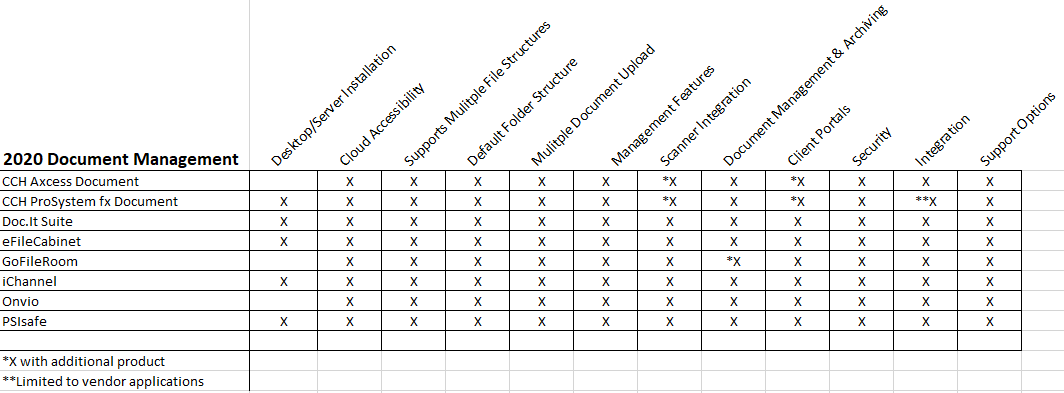
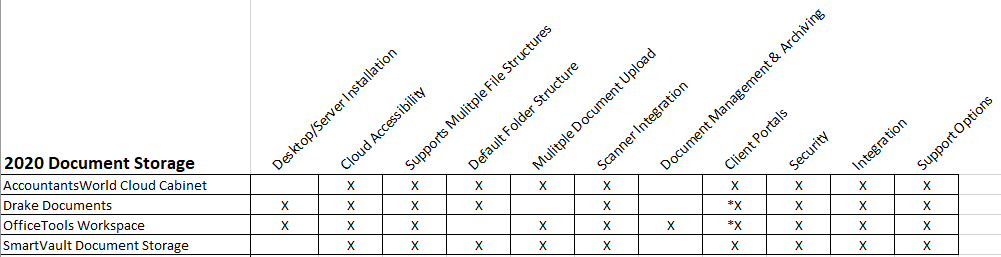 [Click image to enlarge.]Though the early document management systems were designed with larger businesses in mind, there is such a variety of applications available now at all price points that document management software is within the reach of any firm that is ready to make the move to paperless.
 If you’re ready to demolish that stack of papers once and for all, be aware that there are two types of document management systems available: Document Storage, which is designed for electronic storage of all documents, including document organization and easy retrieval, and Document Management, which also includes nifty features like version control, that ensures that the document you’re accessing is the latest, greatest version of the document. Document management systems also typically include document archiving and annotation ability, with both coming in handy for CPA firms.
In this issue of CPA Practice Advisor, we reviewed both document storage and document management systems, with a features chart included with the review. The products we reviewed include:
Document Storage
Document Management
We also looked at a couple of document management systems that are included as part of a broader software system:
Many of these applications also offer a free demo so check a few of them out and see which ones feel right.
If you’re tired of spending your days searching for the elusive missing document, why not start managing documents smarter with a document management system? Your staff and your clients will thank you.
How often do we start and end our days in the same fashion? Our personal groundhog days see us rising at a particular time, checking on the weather either electronically or by peeking out the window, cleaning, dressing, and …
Next
Firm Management
Randy Johnston
Firm Management
Lyle Solomon, Esq.
Firm Management
Firm Management
Subscribe for free and get unlimited access to all CPA Practice Advisor content
Subscribe
CPAPA is registered with the National Association of State Boards of Accountancy (NASBA) as a sponsor of continuing professional education on the National Registry of CPE Sponsors.
© 2022 Firmworks, LLC. All rights reserved
- Published in Uncategorized
The 6 Best Contract Management Software for 2022 – Investopedia
- Published in Uncategorized
File Sharing and Document Management Software Market Future Growth Opportunities 2022-2029 by Key Players | Synology ,Dropbox ,Droplr ,Templafy – Digital Journal

Hi, what are you looking for?
By
Published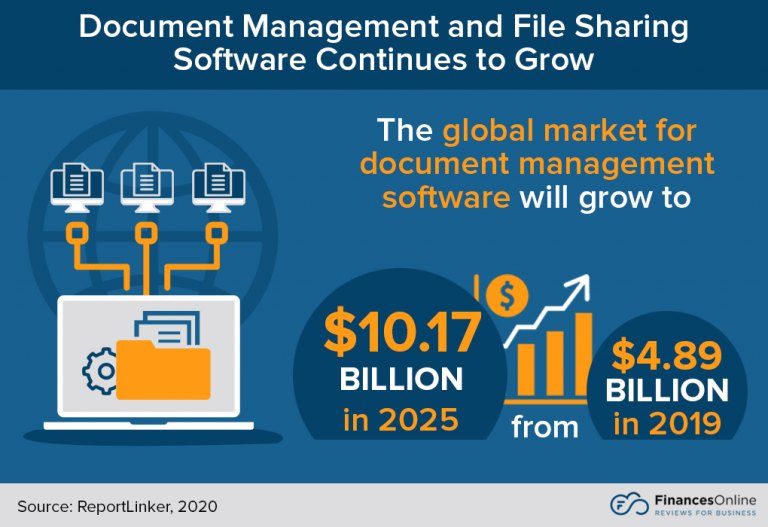
The File Sharing and Document Management Software Market Research focuses on the key trends prevailing in the global business sector. The existing Industry scenario has been studied and future projections with respect to the sector have also been investigated. Market study report comprises evaluation of numerous influential factors including industry overview in terms of recent developments in both historical and current situations, key companies, product/service application and types, key regions and marketplaces, forecast estimation for global market share, revenue and CAGR. File Sharing and Document Management Software Market Report is highly -intensive driven by high R&D investment and has strong product analysis to maintain growth and ensure long-term monetization with a forecast period of 2022-2029.
The size of the global “File Sharing and Document Management Software” market is anticipated to increase during the Forecast period at a CAGR of 26.9% (2029).
DOWNLOAD FREE SAMPLE REPORT:
https://www.marketintelligencedata.com/reports/4440316/2022-2029-global-file-sharing-and-document-management-software-professional-market-research-report-analysis-from-perspective-of-segmentation-competitor-landscape-type-application-and-geography/inquiry?Mode=S230
The record is an in-depth evaluation of a wealthy supply of essential elements that are accountable for the development of the global File Sharing and Document Management Software market. The report splits the market length, through amount and value, based on application, type, and geography. The report profiles the important members in the enterprise, along with an itemized analysis in their positions against the global landscape.
Key players in the File Sharing and Document Management Software market include:
Synology,Dropbox,Droplr,Templafy,Backlog,Wrike,FileInvite,BizPortals 365,Hightail,Citrix Systems,Microsoft,PandaDoc,Google,Samepage,PDFelement,WeTransfer,Zoho,Bitrix,EFileCabinet
Recent Developments:
Dropbox has acquired 20 companies, including 3 in the last 5 years. Dropbox’s largest acquisition to date was in 2019, when it acquired JN Projects for $230M. Dropbox has acquired in 6 different US states. The Company’s most targeted sectors include internet software and services (100%).
Microsoft has acquired 210 companies, including 45 in the last 5 years. A total of 13 acquisitions came from private equity firms. It has also divested 18 assets. Microsoft’s largest acquisition to date was in 2022, when it acquired Activision Blizzard for $68.7B. It’s largest disclosed sale occurred in 2009, when it sold Razorfish to Publicis Groupe SA for $530M. Microsoft has acquired in 26 different US states, and 21 countries. The Company’s most targeted sectors include software (55%) and internet software and services (28%).
The File Sharing and Document Management Software market is primarily split into:
Cloud Based
On-Premise
The File Sharing and Document Management Software market applications cover:
Large Enterprise
SMEs
Geographical segmentation:
ACCESS FULL REPORT:
https://www.marketintelligencedata.com/reports/4440316/2022-2029-global-file-sharing-and-document-management-software-professional-market-research-report-analysis-from-perspective-of-segmentation-competitor-landscape-type-application-and-geography?Mode=S230
What To Expect From This Report On File Sharing and Document Management Software Market
Key Opportunities:
The report analyses the File Sharing and Document Management Software Market’s key opportunities and identifies the factors that are driving and will continue to drive the industry’s growth. It considers past development designs, drivers of development, as well as flow and future patterns.
The Study Objectives of the File Sharing and Document Management Software Market are:
We offer customization on the File Sharing and Document Management Software market report based on specific client requirements:
Thank you for your interest in the File Sharing and Document Management Software Market research publications; you can also get individual chapters or regional/country report versions such as Germany, France, China, Latin America, GCC, North America, Europe or Asia.
Contact us:
Irfan Tamboli (Head of Sales) – Market Intelligence Data
Phone: +1 (704) 266-3234 | +91-750-707-8687
Mail to: [email protected]
This Press Release has been written with the intention of providing accurate market information which will enable our readers to make informed strategic investment decisions. If you notice any problem with this content, please feel free to reach us on [email protected]
Xherald is passionate about offering extensive coverage of global business news. Dedicated to creating every participant’s notification, it reaches its own reader. Daily our experts offer fresh relevant information regarding what is actually occurring in Markets as well as Business. Our headlines are actually swiftly paced and extensive. Our distributor directory connects you with brand new products or services and its market situation from the most effective companies around the planet. Xherald is driven by its 500+ contributors coming from around the world. Xherald provides local as well as global market intelligence information coverage in sectors ranging from healthcare, IOT, chemicals and 17 more sectors. Our updates are quickly paced and detailed. The news we present is actually a mix of authentic content, community contributions and curated headlines announcements. All of the updates our company supplies must pass a strict criterion of genuineness, relevance and significance to our readers.
By increasing the adoption of zero trust practices, businesses can ensure the validation of all users.
The lawsuit accusses the company of violating federal and state laws that govern notice of employment termination.
This might well be the first glimpse of a whole new principle of immunology.
US job gains topped expectations in October, official data showed Friday, as hiring remained resilient and wages moved ever higher.
COPYRIGHT © 1998 – 2022 DIGITAL JOURNAL INC. Sitemaps: XML / News . Digital Journal is not responsible for the content of external sites. Read more about our external linking.
- Published in Uncategorized
Brother X-Series MFC-J6957DW review: Large-format inkjet ideal for SMBs on a budget – IT PRO
View all Business
View all Cloud
View all Hardware
View all Infrastructure
View all Security
View all Software
View all Technology
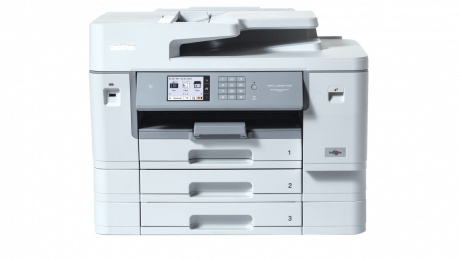
Brother's X-Series MFC-J6957DW is the company's flagship large-format inkjet MFP and offers busy workgroups a sizeable range of print, copy, scan and fax features for a very modest outlay.
It has an impressive capacity, with three 250-sheet A3-sized cassettes plus a 100-page A3 multi-purpose tray (MPT) and tops these off with an A3 colour flatbed scanner partnered by a 50-page duplex automatic document feeder (ADF).
Speeds for A4 printing have been improved, boosting the 22ppm of the MFC-J6947DW to 30ppm, and its daily duty cycle gets a 75% increase to 3,500 pages. It's well connected, too; it can be hooked up over USB, 10/100 Ethernet or 802.11a/n 5GHz wireless, and there's built-in support for NFC, Wi-Fi Direct, AirPrint and a heap of cloud services.
Another winning attribute is its laser-beating running costs. Brother supplies the MFC-J6957DW with a full set of standard ink cartridges, although during installation it has to prime its ink reservoirs so the first set will have a reduced print capacity. Once they've dried up, move to the high-yield versions and you'll only be paying 1p for a mono A4 page and 4.5p for a colour one – plus you can enable Brother's Secure Function Lock feature to control colour usage for each user.
While the reservoirs are filling, you can download Brother's generic setup utility, choose your model and leave it to load the drivers and firmware update tool. It also installs Brother's iPrint&Scan Windows desktop utility, which uses workflows for one-tap print and scan operations, and you can add the free Nuance PaperPort 14 SE document management software.
Brother's Secure Cloud Print portal lets you remotely print PDFs, images and Office documents using a browser. To do this, you simply bookmark the URL displayed in the colour touchscreen, choose a file, send it and release it within 24 hours at the printer using the six-digit PIN generated by the portal.
Remote printing features include Brother's Email Print service. After enabling this from the MFP's web console, it creates a unique address to which you can email attachments from anywhere. Mobile workers get in on the act too, with Brother's Mobile Connect iOS and Android apps providing scan-to-mobile devices plus remote print services.
Scan features are equally versatile and include sending scans to PCs with Brother's software installed, network shares, email, FTP or SharePoint servers, as well as direct-to-email addresses registered at the touchscreen. Cloud destinations are simple to set up using Brother's Web Connect portal. You can choose OneNote, OneDrive, Box, Google Drive, Evernote or Dropbox, add your account details, enter the unique 11-digit code provided at the printer's touchscreen and PIN-protect each account.
We found the top speed is achievable only for mono printing using the driver's Normal setting and drops substantially when higher resolutions are selected. Our 30-page test Word document returned 30ppm in Normal mode but only 2.1ppm in Best mode, while our challenging 24-page colour DTP test print was delivered at 20ppm and 1.8ppm respectively.
That said, print quality in Normal mode is fine for general office use. Text is sharp and clean at 12pt font sizes, while mono photos reveal plenty of detail in darker areas. Colour output quality is also impressive: the smooth transitions across complex colour fades in our test charts translated into high-quality reports and detailed photos, with no banding evident in large single-colour blocks.
The printer handles A3 poster printing exceedingly well. Using the rear MPT tray, our A3 colour poster took only ten seconds in Normal mode on 80gsm paper and 62 seconds in Best mode on 220gsm heavyweight card, with the rich colour quality of Brother's ink making them vibrant and eye-catching.
Print speeds are variable, but Brother's MFC-J6957DW makes up for this with an astonishing range of features. Ideally suited to SMBs on a tight budget, this affordable large-format inkjet delivers low running costs, good output quality and the best cloud and mobile support.
Format
Warranty 1yr warranty
The big book of ZTNA security use cases
Know your ZTNA protection index
A five step blueprint for master data management success
How to create a strategic plan for deploying your MDM initiative
Gartner peer insights: Voice of the customer
Master data management solutions
iPaaS technology value matrix 2022
Simplify integration processes, reduce costs, enable business users, and redeploy developers to more advanced projects
LockBit repeats 'PR stunt' as Thales ransomware investigation reveals no breach
What hyperrealistic holograms mean for the workplace
Twilio tackles 'crucial' customer retention with trio of platform upgrades
ITPro is part of Future plc, an international media group and leading digital publisher. Visit our corporate site www.futureplc.com
© Future Publishing Limited, Quay House, The Ambury, Bath BA1 1UA. All rights reserved. England and Wales company registration number 2008885
- Published in Uncategorized
WWF Launches Open-Source App To Make Food Supply Chains More Transparent – Forbes

NAKHON SI THAMMARAT, THAILAND – 2020/03/23: Workers unload fish from a trawler in a Khanom port. … [+]
The World Wildlife Fund (WWF) has launched an app that aims to help food supply chains become more transparent.
The transparenC app (available for both Android and iOS devices) and web portal is the world’s first open-source traceability software for any kind of food supply chain.
It can be used anywhere by farmers, buyers and retailers without paying licensing fees to ensure transparency and accountability across all stages of food production.
The app has been co-developed with Republic Systems.
The WWF’s global network lead for aquaculture, Aaron McNevin told Forbes the genesis for the app was the issues faced by shrimp farmers in Thailand, who could not get the source of the fish meal they were using to meet certification requirements.
McNevin said the seafood supply chains are particularly complicated because of the number of small owners involved, who make traceability more difficult and therefore increase the risks involved for retailers who purchase their products.
“We wanted to really break the cost barrier for electronic traceability systems,” he told Forbes. “And we’ve been trying to work with those retailers that truly do want to know what their supply chains look like, that want to dig in and get the information, and then have a greater understanding of any risks involved.
He added the app works by creating a series of nodes for all the people or companies involved in the supply chain. Each user is required to upload either documents or pictures to the various nodes, which administrators at the top of the chain can check and verify.
“Because we’re dealing so far upstream in the supply chain, we’re not necessarily asking for grandiose documentation,” he explains. “What we’re trying to do is connect all the actors in the process.
“For the farmers, there’s typically only one or two requirements that just require them to take a picture of one document or another, then they get greenlit and they can pass that on to the person that’s buying from them.
“The person who is buying from them then has to reconfirm the information by tagging, and that just follows down the supply chain. The buyers don’t need all of the information, but they need to have access to all of the information that is available.
“So, when it gets to the point of export, a supply chain tree is populated. You can see the whole tree and if you need to dig deeper, you can dig in each one of those nodes.”
The app has already been tested with seafood supply chains in Vietnam, Thailand and India and palm oil producers in Honduras, but McNevin said it will work for any food supply chain, like dairy or beef.
He said the added transparency the app will bring will also help “decouple” habitat conversion from food production that is occurring all over the world.
“Traceability in complex supply chains, especially in the developing world, will not be solved with high-tech solutions,” he added.
“Instead, by focusing on cost-effective tools that help organize and link supply chain actors together, we’ll begin to achieve traceability results that deliver big impact. That’s why we developed transparenC – to break down barriers to advancing traceability and make it accessible to all.”
The founder of Republic Systems, Robert Hughes said they became involved with the project because the “need for mobile technology for first-mile actors fits well with our capabilities and we believe sustainability is a moral imperative”.
Hughes added: “By building the apps with open source libraries and creating a unique user experience for imaging, offline, and trace map, transparenC allows for users on vessels/farms to build complex traces using simple apps with no license fees. We are excited to continue with World Wildlife Fund in bringing this important tech to suppliers who strive for true sustainability.”
- Published in Uncategorized